
Scott Bessent Declares the K-Shaped Economy Over, But Economic Data Suggests a Different Reality


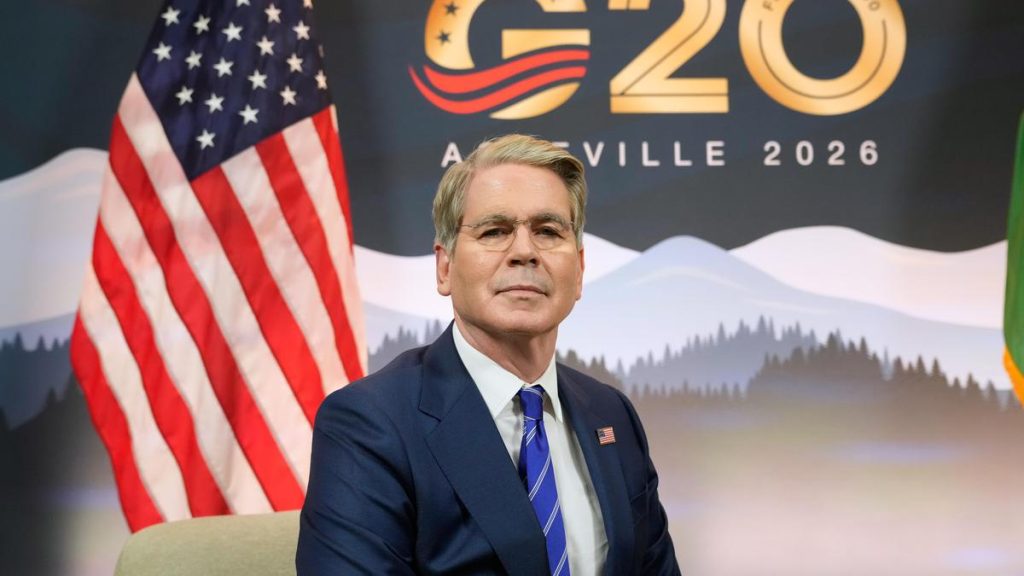
Treasury Secretary Scott Bessent recently asserted that the K-shaped economic recovery, characterized by disproportionate gains for higher earners while those at the lower end struggle, has concluded. During a CNBC interview, Bessent expressed his weariness with the term, stating definitively, “I can say here definitively, the K-shaped economy is over.” He instead posited a “C-shaped economy,” where lower-wage earners are experiencing a resurgence akin to patterns observed in President Trump’s initial term. This perspective hinges on the belief that the economic landscape is now fostering broader gains, particularly for those previously left behind.
Bessent cited specific figures to bolster his argument, pointing to a reported 2% real wage gain for the bottom 25% of workers. This figure likely references Treasury data indicating blue-collar workers saw a 1.7% growth in the first five months of Trump’s presidency. Furthermore, he highlighted the impact of White House policy, specifically the One Big Beautiful Bill Act. This legislation, touted as the largest tax break in history, aimed to provide an average 15% tax cut for Americans earning between $15,000 and $80,000. It also promised an additional $1,500 annually for tipped and overtime workers and projected an increase in after-tax income for a typical two-child family ranging from $7,600 to $10,900.
Some financial institutions have also noted shifts that could align with Bessent’s optimistic outlook. Bank of America, for instance, observed in a recent note that certain elements of the K-shaped economy appear to be diminishing. Aditya Bhave, the bank’s chief U.S. economist, reported that consumer spending, excluding gas, had ceased exhibiting K-shaped characteristics on a year-over-year basis for a two-week period. Bhave attributed this trend to several factors: stronger job growth or lower tax withholding, a drop in gas prices in June, and a favorable base effect stemming from the widening gap in June of the previous year.
Despite these pronouncements and observations, a closer examination of economic data presents a more nuanced picture, often diverging from Bessent’s definitive declaration. Both Goldman Sachs and Morgan Stanley have suggested that the benefits promised by the One Big Beautiful Bill Act have been largely offset by the knock-on effects of the Iran war on gasoline prices. This effectively negates the anticipated financial windfall for many households, particularly those with tighter budgets.
Moreover, wage growth data, a key indicator of economic inclusivity, does not consistently support the idea that the K-shaped economy is a relic of the past. The Federal Reserve Bank of Atlanta, which tracks a 12-month moving average of hourly wage growth by income quartile, reported in June that the lowest quartile saw growth of 3.6%, while the top 25% of earners experienced a slightly higher growth of 3.9%. Throughout 2026, the Atlanta Fed’s data indicates that median wage growth for the bottom percentile of earners has not surpassed that of the top percentile. Instead, the third quartile has consistently shown the most significant growth.
The mechanisms driving wealth accumulation also suggest a persistent imbalance. Joe Brusuelas, chief economist at RSM, pointed out in June that roughly 75 cents of every dollar generated by the recent equity rally flows to the top income quintile. He cautioned that relying on the stock market to sustain the consumer economy actually deepens the K-shape rather than mitigating it, as the wealth effect channel disproportionately benefits higher earners. BNP Paribas’s markets team echoed this sentiment, noting that equity holdings are concentrated among high-income individuals. While these individuals may have a lower marginal propensity to consume (meaning they spend a smaller proportion of additional income), the sheer scale of their gains means their consumption remains a significant economic driver.
Mark Zandi, chief economist at Moody’s, offered a direct counterpoint to Bessent’s statement last month, asserting that the K-shaped economy, with its disparity between the affluent and the rest, “remains firmly intact.” Citing Federal Reserve data, Zandi highlighted that for the 12 months ending in the first quarter of 2026, outlays by earners making $200,000 or more annually grew by an estimated 6.5%, nearly 4% in real terms. In stark contrast, outlays by those in the bottom 80% showed no change after accounting for inflation. This sustained divergence in spending power suggests that while some segments of the economy might be experiencing positive shifts, the fundamental K-shaped distribution of economic benefits continues to persist.
Related Posts
Previous Post
Next Post


Sponsored Content

Sponsored Content