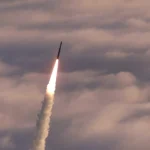

Japan and Australia Forge New Defense Ties with Hypersonic Missile Testing Agreement


The expansive Woomera Range Complex in South Australia, a site historically pivotal for defense research, is poised to become a critical proving ground for advanced military technology from an unexpected partner. Japan and Australia have formalized an agreement that will see Tokyo test its cutting-edge hypersonic and other missile systems within Australian borders, a significant step that deepens their strategic alignment and marks a new phase in regional defense cooperation. This arrangement, years in the making, underscores a mutual desire to enhance deterrence capabilities in a rapidly evolving Indo-Pacific security landscape.
For Japan, access to Woomera offers an unparalleled opportunity. Its domestic testing facilities are constrained by geography and population density, making large-scale, long-range missile trials challenging. Woomera, with its vast, unpopulated expanses spanning over 120,000 square kilometers, provides the ideal environment for evaluating systems that require extensive flight paths and impact zones. This includes the highly anticipated hypersonic glide vehicles, which travel at speeds exceeding Mach 5 and maneuver unpredictably, posing significant challenges to existing air defense systems. The agreement is not merely about convenience; it reflects a strategic imperative for Japan to accelerate the development and deployment of these advanced weapons, which are seen as crucial for maintaining a credible deterrent.
Australia, in turn, benefits from this collaboration on multiple fronts. Hosting Japanese missile tests strengthens its position as a key security partner in the region and provides its own defense scientists and military personnel with invaluable exposure to advanced technologies. While the specifics of Australia’s direct involvement in the testing process beyond providing the range are not fully public, such partnerships often involve shared data, joint analyses, and opportunities for reciprocal learning. The agreement also complements existing defense ties, such as the trilateral AUKUS security pact with the United States and the United Kingdom, further integrating Australia into a network of technologically advanced allies.
The genesis of this agreement lies in the broader shift in Indo-Pacific geopolitics. Both Japan and Australia share concerns about regional stability and the rapid military modernization of other powers. For Tokyo, moving beyond its post-war pacifist constraints on defense capabilities has become a pragmatic necessity, driven by an acknowledgment of contemporary threats. Developing and testing long-range strike capabilities, including hypersonics, is part of a broader strategy to enhance its “counterstrike capabilities,” a concept that has gained traction within Japanese defense planning. The collaboration with Canberra provides a practical pathway to achieving these objectives.
Details surrounding the specific types of missiles beyond hypersonics that will be tested, or the precise timeline for these trials, remain largely undisclosed. However, the announcement itself sends a clear signal about the deepening military-technical cooperation between two democratic nations that are increasingly intertwined by shared security interests. This move follows a series of enhanced defense engagements between Japan and Australia, including joint military exercises and intelligence sharing, all aimed at bolstering a free and open Indo-Pacific. The Woomera agreement solidifies this trajectory, marking a tangible commitment to collective deterrence and technological advancement in a complex strategic environment.
Related Posts


Previous Post
Next Post


Sponsored Content

Sponsored Content