
United Arab Emirates Halts All Trade with Iran as Regional Tensions Escalate


Abu Dhabi has moved to sever all trade, commercial, and financial exchanges with Iran, a significant shift in regional economic dynamics that emerged following a fresh volley of missile strikes. The announcement from Afra Al Hameli, Director of the Strategic Communications Department at the Ministry of Foreign Affairs, confirmed the suspension would remain in effect until further notice, citing regional escalations as the primary driver. This decision marks a notable hardening of the UAE’s stance toward its neighbor, reflecting growing anxieties over stability in the Gulf.
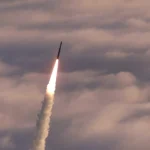
The Emirati foreign ministry emphasized its commitment to upholding the integrity of the international financial system and adhering to global standards, while simultaneously rejecting suggestions that the economic relationship between the two nations had been unaffected prior to these recent events. This move follows an incident earlier in the week where Abu Dhabi reported that two ballistic missiles, attributed to Iran, had landed at sea, with one falling within Emirati territorial waters. Tehran, through its foreign ministry spokesman Esmail Baghaei, has since “categorically rejected” these claims, denying any targeting of the UAE.
This latest measure from the UAE is not an isolated incident but rather the culmination of escalating friction since the broader conflict began on February 28, when US and Israeli forces initiated attacks on Iran. In the aftermath, Iran responded with daily missile and drone strikes across neighboring countries. The UAE had previously been a vital trading partner for sanctioned Iran, home to a substantial Iranian expatriate community, a dynamic that has now fundamentally changed. Earlier in the conflict, the UAE had already recalled its ambassador and closed Iran-linked schools and a hospital, signaling a progressive deterioration in relations.
The implications of this trade halt extend beyond direct dealings, potentially impacting the intricate networks Iran has established to circumvent sanctions. The US Treasury’s Financial Crimes Enforcement Network had previously highlighted how Iranian entities often utilize front companies in third countries, exploiting free trade zones for company formation. These networks frequently involve general trading companies registered in UAE commercial free zones, routing funds through non-resident accounts in Hong Kong and China, with Singapore and Hong Kong serving as key trading counterparties. While the suspension directly addresses dealings with Iran, the broader impact on these more clandestine financial channels remains an unfolding concern.
Hours after Abu Dhabi’s declaration, Ali Abdollahi, Iran’s armed forces chief of staff, issued a stark warning to Gulf countries, cautioning against any assistance to the US military. He asserted that “any assistance or facilitation provided to the aggressor US military amounts to participation in the US military operation,” according to Mehr news agency. This statement comes amid ongoing debate about the presence of US military assets in the Gulf, including in the UAE, and questions over host countries’ knowledge of their operations. Despite assurances from many Middle Eastern nations that they would not allow their territory to be used as a launchpad, Abdollahi expressed skepticism, pointing to the visible presence of military aircraft and refuelling planes at regional bases.
The Strait of Hormuz, a critical maritime chokepoint through which vessels departing most UAE ports must pass, has become a focal point of these tensions. Iran has imposed a blockade, and a proposed US-Iran deal to reopen the corridor has collapsed. The situation has already seen ADNOC, the Emirati state oil company, endure repeated targeting of its tankers. An ADNOC carrier was reportedly struck by a missile on August 8, followed by two more vessels on August 14, though without casualties. These incidents, which Abu Dhabi denounced as “flagrant violations” of international law and acts of “piracy by Iran’s Revolutionary Guard Corps,” underscore the volatility in one of the world’s most crucial shipping lanes. Crude oil flows through the strait averaged a mere 4.9 million barrels a day in the second quarter of this year, a dramatic reduction from 21.6 million barrels a day in the final quarter of 2025. The US Energy Information Administration anticipates continued severe constraints through August, with a slow recovery projected from September, and does not foresee a return to pre-conflict production and trade patterns before early 2027. This outlook has led to a revised Brent forecast of $85 a barrel for the third quarter, an $11 increase over previous estimates.
Related Posts
Sponsored Content

Sponsored Content