
Two Nordic Leaders Called Putin for 90 Minutes. Here’s What They’re Trying to Build.

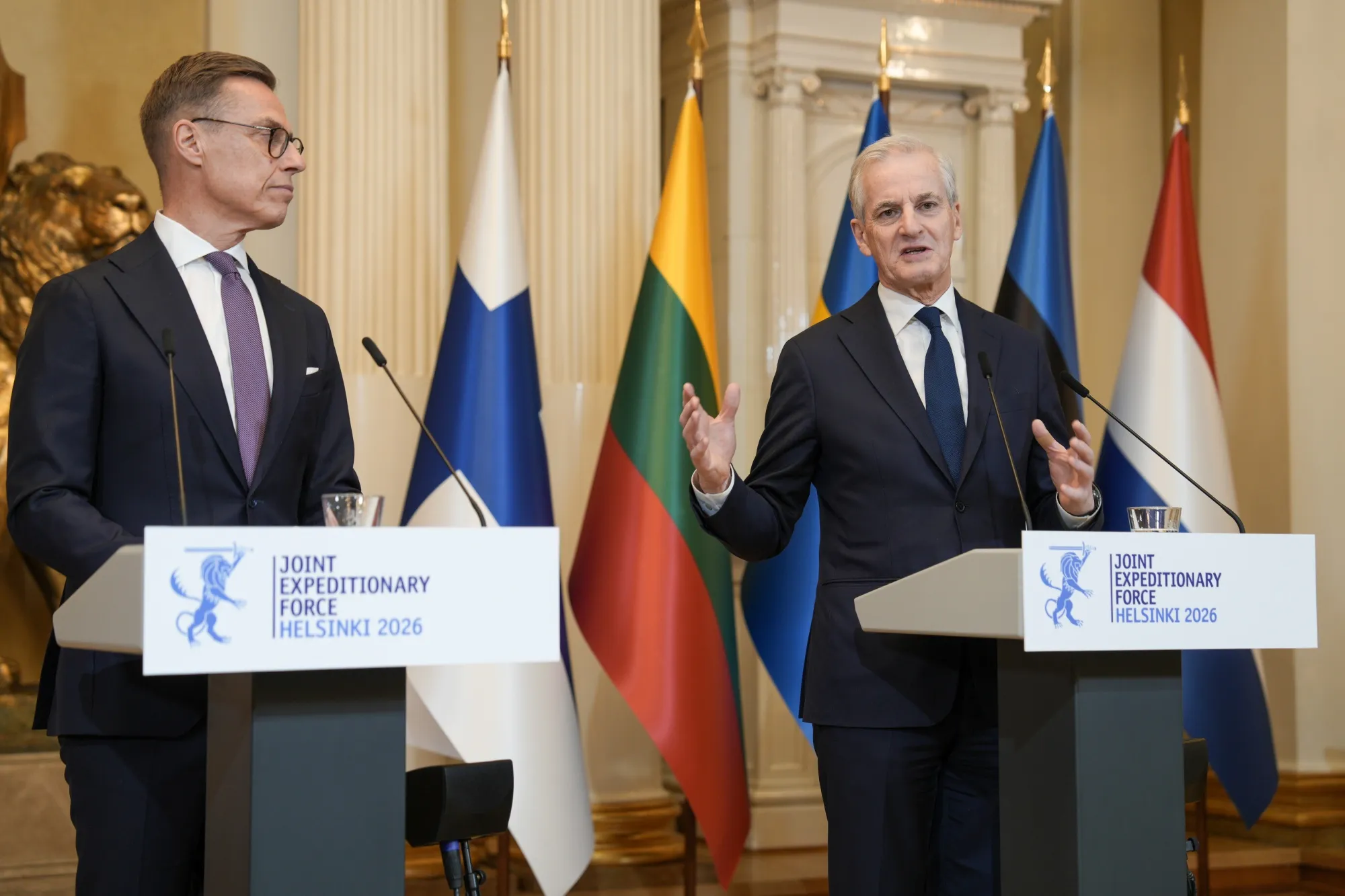
Finnish President Alexander Stubb and Norwegian Prime Minister Jonas Gahr Støre have put themselves at the center of a fresh diplomatic push on Ukraine, holding a roughly 90-minute phone call with Vladimir Putin before immediately briefing Ukrainian President Volodymyr Zelenskiy on what was said, an unusual instance of European leaders engaging Moscow directly rather than through Washington or Brussels.
The call came at a sensitive moment. It followed a shift in Donald Trump’s position that moved closer to Russia’s framing of the war, and came as US-Ukraine relations hit their lowest point in roughly 18 months, a gap that appears to have prompted Stubb and Støre to step into the diplomatic vacuum rather than wait for Washington to recalibrate.
What Putin told them wasn’t encouraging for a quick breakthrough. He ruled out any compromise over the Donbas region, reiterating that Russia intends to control the full territory rather than negotiate a partial settlement, a position that leaves little room for the kind of middle-ground peace deal outside observers have floated. In response, Stubb and Støre pressed Putin on concrete steps to de-escalate Russian attacks on Ukraine’s energy facilities and broader infrastructure, according to Zelenskiy’s own account of the briefing.
The pairing of Stubb and Støre isn't incidental. The two have two decades of personal friendship behind them, a relationship people familiar with the dynamic say has let Finland and Norway punch well above their combined diplomatic weight on the world stage. They've run this playbook before: the duo was behind earlier overtures to Trump over his threats to annex Greenland, and later helped assemble roughly 30 world leaders to sign a joint call for regulating advanced AI models.
This latest outreach is explicitly tied to a larger diplomatic calendar rather than standing alone. Stubb and Støre have linked their direct contact with Putin to preparations for trilateral talks involving Ukraine, Russia and the United States, expected to take place in Abu Dhabi next month, positioning their call less as a freestanding peace initiative and more as groundwork meant to shape what those broader talks actually have to work with.
Whether that groundwork amounts to meaningful progress is an open question given Putin's firm stance on Donbas. But the Nordic duo's willingness to engage Moscow directly, and to brief Kyiv immediately afterward, signals a model of European diplomacy operating somewhat independently of Washington's shifting posture, built on a personal partnership that has already shown it can move faster than formal institutional channels when the moment calls for it.