
The World’s First Trillionaire Holds Firm on His Unyielding Company Vision

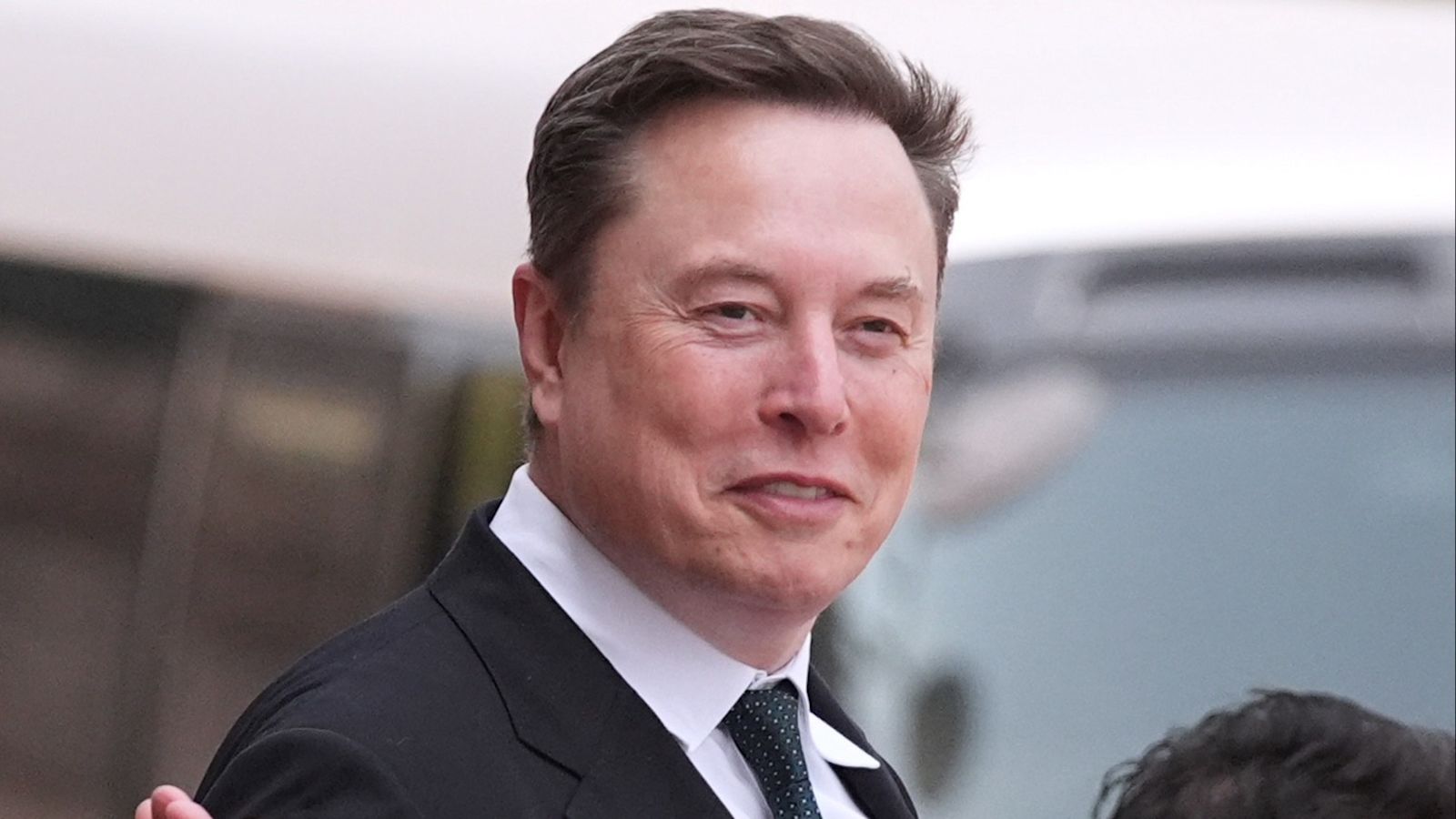
The financial world has long speculated about the arrival of the first trillion-dollar personal fortune, a benchmark once considered purely theoretical. While the individual’s identity remains a topic of intense discussion among analysts and economists, the narrative frequently circles back to one figure and the enterprise he continues to steer with an iron grip. This particular titan, whose wealth has now reportedly crossed the elusive trillion-dollar threshold, has built an empire that touches nearly every facet of modern life, from digital commerce to space exploration, yet it is his unwavering control over his foundational company that truly defines his legacy.
Sources close to the company, often described as an unyielding fortress of innovation, suggest that succession planning, a common practice in mature corporations, is virtually non-existent. The founder, despite his advanced age by Silicon Valley standards, maintains an active role in daily operations, product development, and long-term strategy. This hands-on approach, while credited with the company’s unprecedented growth and market dominance, has also sparked conversations about its future resilience should the founder ever step away, or be forced to. The company’s structure, heavily influenced by its creator’s vision for decades, presents a unique challenge for investors accustomed to more traditional corporate governance.
Observers point to several critical instances where the founder personally intervened to squash dissenting opinions or redirect major strategic initiatives, even against the advice of his seasoned executive team. One such widely reported event involved a multi-billion-dollar acquisition target that the board initially favored, only for the founder to unilaterally veto the deal, citing a misalignment with his long-term technological roadmap. Months later, the company unveiled an in-house development that mirrored the acquisition’s capabilities, but with a proprietary edge, ultimately proving the founder’s foresight, albeit at the cost of internal friction.
This pattern of centralized decision-making, while undeniably successful in fostering rapid innovation and market disruption, raises questions about the company’s adaptability in a post-founder era. The cult of personality surrounding the individual is so pervasive that many perceive the company and its leader as inextricably linked. Competitors have often struggled to replicate the company’s agility, partly because their leadership structures are more dispersed and consensus-driven. This contrast highlights a fundamental difference in corporate philosophy: one built on collective input versus another driven by a singular, powerful vision.
The company’s sheer scale is staggering, employing millions globally and influencing billions of consumers. Its market capitalization frequently fluctuates, but its core businesses continue to generate immense revenue streams, fueling further investments into nascent industries and speculative ventures. These ambitious projects, often dismissed as fanciful by critics, have a surprising track record of transforming into profitable new divisions, further cementing the founder’s reputation as a visionary. The ability to fund such long-term, high-risk endeavors is a luxury afforded by the company’s established dominance and the founder’s nearly limitless personal resources.
While the financial community marvels at the trillion-dollar milestone and the continued expansion of this corporate behemoth, the central question remains: what happens when the architect of this empire eventually relinquishes control? The company’s enduring success has been predicated on the founder’s singular drive and uncompromising vision. Detaching the organization from its creator, who has shaped its culture, strategy, and even its public image for decades, represents an unprecedented challenge that will undoubtedly redefine not only the company’s trajectory but potentially the broader tech landscape itself. The transition, whenever it occurs, will be a closely watched event, scrutinized for its implications across global markets.
Related Posts
Previous Post
Next Post

Sponsored Content

Sponsored Content