

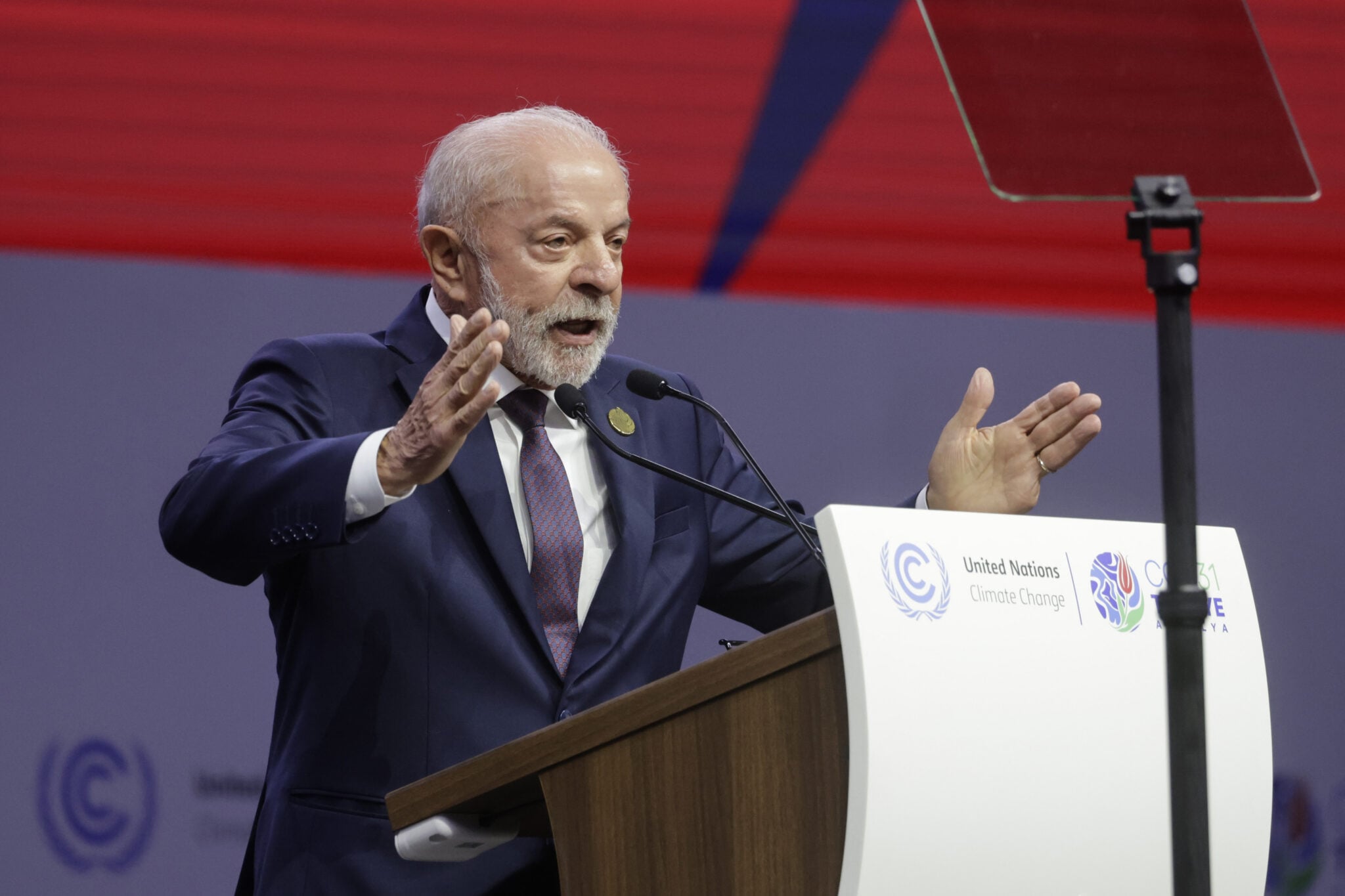
Brazilian President Luiz Inacio Lula da Silva urged world leaders at the COP31 climate summit in Turkey to fight harder against global warming, warning that wars and inflation are pushing the climate crisis off the agenda.
Brazilian President Luiz Inacio Lula da Silva opened the high-level segment of the COP31 climate summit in Antalya, Turkey, with a blunt message for fellow leaders. Countries have grown complacent about global warming, he said, distracted by war, inflation and trade disputes.
“We started talking more about weapons and tariffs than the survival of future generations,” Lula told delegates on Wednesday. “With the wars and inflation knocking on our doors today, it is more difficult for us to deal with this climate catastrophe of tomorrow.”
A bleak assessment
Lula’s remarks landed alongside a sobering United Nations assessment: the world is no longer on track to meet the Paris Agreement’s central goal of limiting global warming to 1.5 degrees Celsius. The target, which scientists say is critical to avoiding the worst effects of climate change, has slipped out of reach based on current national pledges and emissions trajectories.
“The truth is that we have the power to determine how high, how long and how devastating that overshoot will be,” UN Secretary-General Antonio Guterres told the same session. “We have the power to make sure the overshoot is a temporary breach.”
Political momentum after elections
Lula spoke fresh from winning a fourth term in Brazil, a comeback victory against climate sceptic Flavio Bolsonaro. Democratic gains in the United States midterm elections have also added to the sense that voters in some of the world’s largest economies want stronger climate action. Delegates hope those shifts will inject new energy into the two weeks of talks that began on November 9.
The summit is taking place at a difficult moment. Tens of thousands of diplomats, activists and business representatives are gathered in Antalya, but the world’s attention is fragmented. Russia’s war in Ukraine, the conflict between Israel and Iran, inflation pressures and tariff disputes have crowded climate change out of headlines and government agendas.
Notable absences
The United States has no official representation at the summit for a second consecutive year. Top leaders from China, India, Germany and Canada are also absent, limiting the forum’s ability to deliver breakthrough commitments. UK Prime Minister Andy Burnham and Finnish President Alexander Stubb are among the senior officials who did attend.
Turkish President Recep Tayyip Erdogan, whose country is co-hosting COP31 with Australia, acknowledged the challenge. "Either we look at the difficulties and we complain, or we embrace hope and take action," he said. "With every minute that we fail to achieve the targets set out in the Paris Agreement, the risks and costs we face continue to grow."
Finance and fossil fuels on the table
Lula called on Turkey and Australia to prioritise three areas: climate finance, the transition away from fossil fuels, and deforestation targets. Brazil has circulated road maps that would scale climate finance for developing countries to $1.3 trillion by 2035 and end deforestation by the end of the decade.
Any push to accelerate the shift away from oil, gas and coal is expected to meet resistance from petrostates, including Saudi Arabia. Guterres used his speech to sharpen the argument, noting that nine large oil and gas companies collectively earned about $95 billion in profits in the last quarter, far more than the roughly $600 million that has flowed into the UN's loss and damage fund for climate-hit developing nations.
"It is time for governments to tax these windfall profits and use them to help vulnerable countries recover," Guterres said. "Polluters must pay."
What is at stake
The consequences of planetary warming have been visible throughout 2026. Lethal heat waves and wildfires across Europe killed tens of thousands of people, and a glacier collapse in Nepal caused widespread devastation. Those events are a preview of what scientists say will become more common if temperatures keep rising.
For Lula and other leaders demanding faster action, the challenge is to cut through the noise of war and economic anxiety and convince voters and governments that the climate crisis is equally urgent. The Antalya summit is the last major UN climate meeting before Guterres steps down next month, adding pressure on negotiators to produce something concrete before the talks close.