

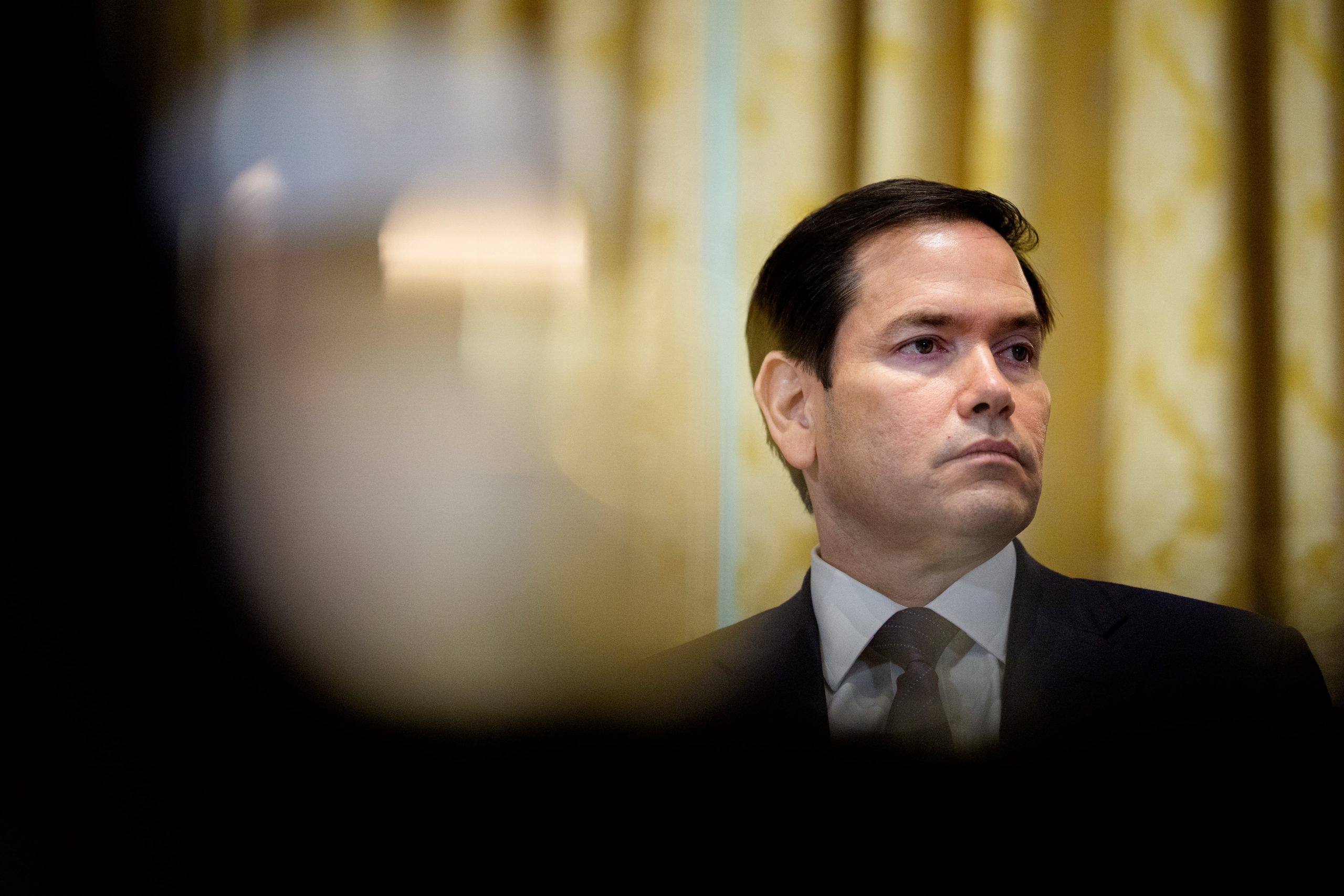
Secretary of State Marco Rubio is weighing whether to leave the Trump administration after Republicans suffered sweeping losses in the midterm elections, according to people familiar with the matter.
Secretary of State Marco Rubio is weighing whether to leave the Trump administration, people familiar with the matter said, as he considers his next steps following Republicans’ sweeping losses in this week’s midterm elections.
Rubio and his advisers are reviewing options for his future, according to the people, who asked not to be identified discussing internal deliberations. He has not decided whether to step down from his dual roles as the top US diplomat and national security adviser, and there is no timetable for a possible departure.
White House discussions
Rubio has spoken with White House officials about stepping down and has been asked to stay, the people said. A departure before January would give President Donald Trump an opportunity to nominate a successor before Democrats secure a Senate majority, although confirmation prospects would depend on the timing and the candidate.
The discussions come at a delicate moment for the administration. The Republican Party’s midterm wipeout has intensified scrutiny of Trump’s inner circle and raised questions about who will shape the party’s direction in the final two years of his presidency.
Political calculations
Rubio, a former senator from Florida and 2016 presidential candidate, is widely seen as a potential contender for the Republican nomination in 2028. Remaining in the administration through the end of Trump’s term would keep him in high-profile foreign policy roles but could also tie him closely to an unpopular outcome in the midterms.
Leaving earlier could give him distance from the administration and more time to build an independent political operation. It could also allow him to weigh in on the party’s future direction at a moment when Republicans are debating what went wrong and who should lead them next.
No public signal
Rubio has given no public indication that he plans to resign. The State Department has not commented on the deliberations, and the White House has publicly pushed back on speculation about Cabinet departures.
Still, the report of his uncertainty underscores the broader turmoil inside the Republican Party after an election that cost it control of Congress. Cabinet members and senior aides often reassess their positions after a major electoral defeat, and Rubio's case is being watched closely because of his national profile and future ambitions.
What happens next
The timing of any departure, if it happens at all, remains unclear. Trump could try to persuade Rubio to remain, particularly given the value of keeping a seasoned figure in both the State Department and the National Security Council.
For now, Rubio's deliberations add another layer of uncertainty to an administration adjusting to a dramatically changed political environment. Whether he stays or goes, his decision is likely to influence the early positioning for the post-Trump Republican contest.