

Iran’s Security Chief Warns of “Seismic” Retaliation as Trump Administration Prepares New Economic Measures

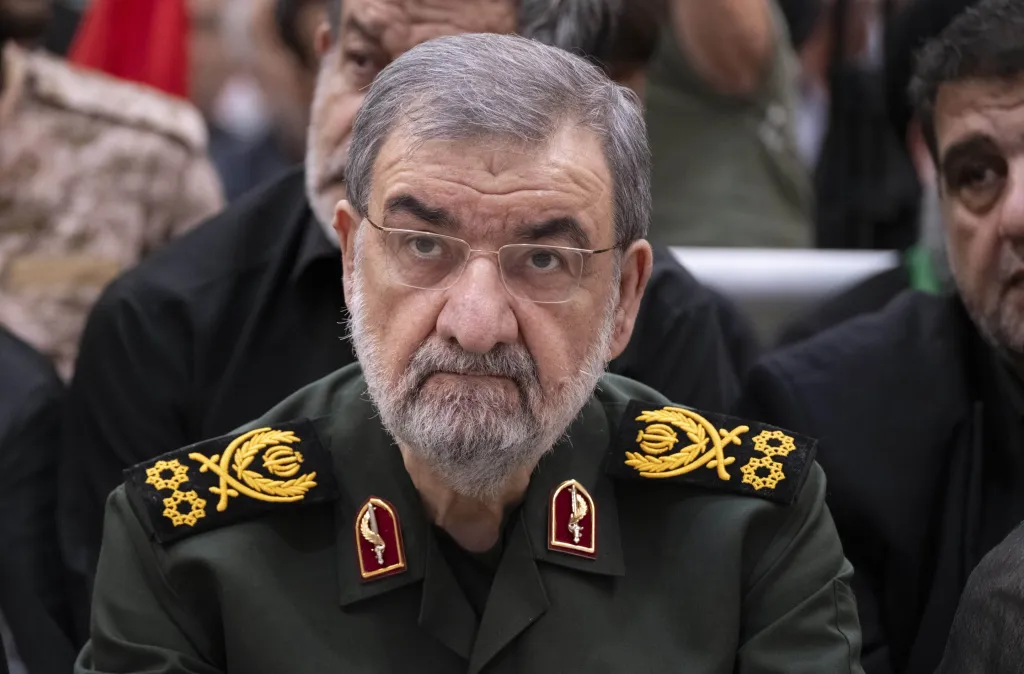
The specter of intensified confrontation looms large as the Trump administration prepares to unveil new economic measures against Iran, prompting a stark warning from Tehran’s top security official. Mohsen Rezaei, the hard-line leader of Iran’s Supreme National Security Council, declared that any country supporting these impending U.S. economic actions would be considered to have committed an “act of war.” This pronouncement, shared widely by Iranian state media, underscores a hardening stance within the Islamic Republic just as Treasury Secretary Scott Bessent is slated to announce the new sanctions on Monday.
Rezaei’s remarks on X followed extensive public comments made the previous day, where he cautioned that Iran would “retaliate in a seismic manner” if President Trump pursued further actions. He specifically mentioned targeting oil-shipping routes beyond the Strait of Hormuz, indicating a potential broadening of any future conflict. Rezaei, a former Revolutionary Guard commander and military adviser to Supreme Leader Ayatollah Mojtaba Khamenei, is among recent senior appointments widely interpreted as a move to solidify Tehran’s political and military posture. This comes as Iran has endured decades of sanctions, with the U.S. vowing an “unprecedented” level of economic pressure.
Amidst these escalating tensions, Iranian President Masoud Pezeshkian defended a memorandum of understanding with the United States, signed in mid-June, as the most viable path forward from a state of “neither war nor peace.” Pezeshkian, whose comments were published by state-run IRNA, emphasized that the agreement contained no provisions amounting to “capitulation” and affirmed that Iran would follow the policies set by the supreme leader. This interim deal had initiated a 60-day period for discussions aimed at resolving the conflict and addressing Iran’s nuclear program, a period that concluded last week without any signs of compromise or extension.
While rhetoric escalated, a momentary calm settled over the Strait of Hormuz, with no confirmed attacks reported by a multinational coalition overseen by the U.S. Navy in the past 48 hours. However, shipping traffic in the vital waterway remained at reduced levels. The U.S. military reported its blockade of Iranian ports had rerouted 70 commercial ships and disabled three as of Sunday. Countering this, Iran’s recently established Persian Gulf Strait Authority, itself sanctioned by the U.S., issued a list of dozens of vessels it claimed had violated transit arrangements and would face future restrictions, including fines or seizures. Previously considered an international waterway, the strait’s management is now under discussion between Iran and Oman, potentially involving new transit fees.
Diplomatic efforts to de-escalate the situation are also underway. Pakistan’s Field Marshal Asim Munir is expected to lead a delegation to Tehran on Monday, as reported by Iranian state television, citing Foreign Ministry spokesperson Esmail Baghaei. Regional officials, speaking anonymously, indicated that Islamabad’s visit is part of a broader initiative to ease U.S.-Iran tensions and encourage a return to negotiations. This diplomatic push unfolds against a backdrop of domestic turmoil within Iran, with the judiciary’s Mizan news agency reporting the recent execution of Majid Adineh, arrested in January in connection with nationwide protests. Adineh was convicted under Iran’s law imposing harsher penalties for espionage and cooperation with hostile states, with the judiciary alleging he received training from groups outside the country.
The broader Middle East continues to grapple with localized conflicts and violence, further complicating the regional landscape. In the occupied West Bank, Israeli forces shot and killed a 14-year-old in the Askar refugee camp in Nablus, while a 61-year-old Palestinian, Saeed Muhammad Ibrahim Rabah, was reportedly beaten by a 16-year-old from the Israeli settlement of Avigayil. Separately, Israel’s military detained a suspect in a stabbing attack that wounded a 24-year-old Israeli man in the al-Auja area. In Gaza, an Israeli airstrike on a central house resulted in the death of four-year-old Mohammed Taha and wounded at least five others, according to Al-Aqsa Martyrs Hospital. The Israeli military later confirmed it struck and killed a Hamas commander, Ismail Abu Ful, in central Gaza. Defense Minister Israel Katz has instructed the military to “act immediately and forcefully” to prevent launches of balloons, kites, or drones from Gaza toward nearby Israeli communities, a reminder of the tactics used before the October 7, 2023, attack by Hamas-led militants. Hamas, in turn, accused Israel of “using children’s toys as a pretext” for attacks and further displacement of Gaza residents.
Related Posts


Previous Post
Next Post


Sponsored Content

Sponsored Content