
OpenAI Watermarks Expose Fake Images Claiming Kyiv Monastery Strike Was Staged

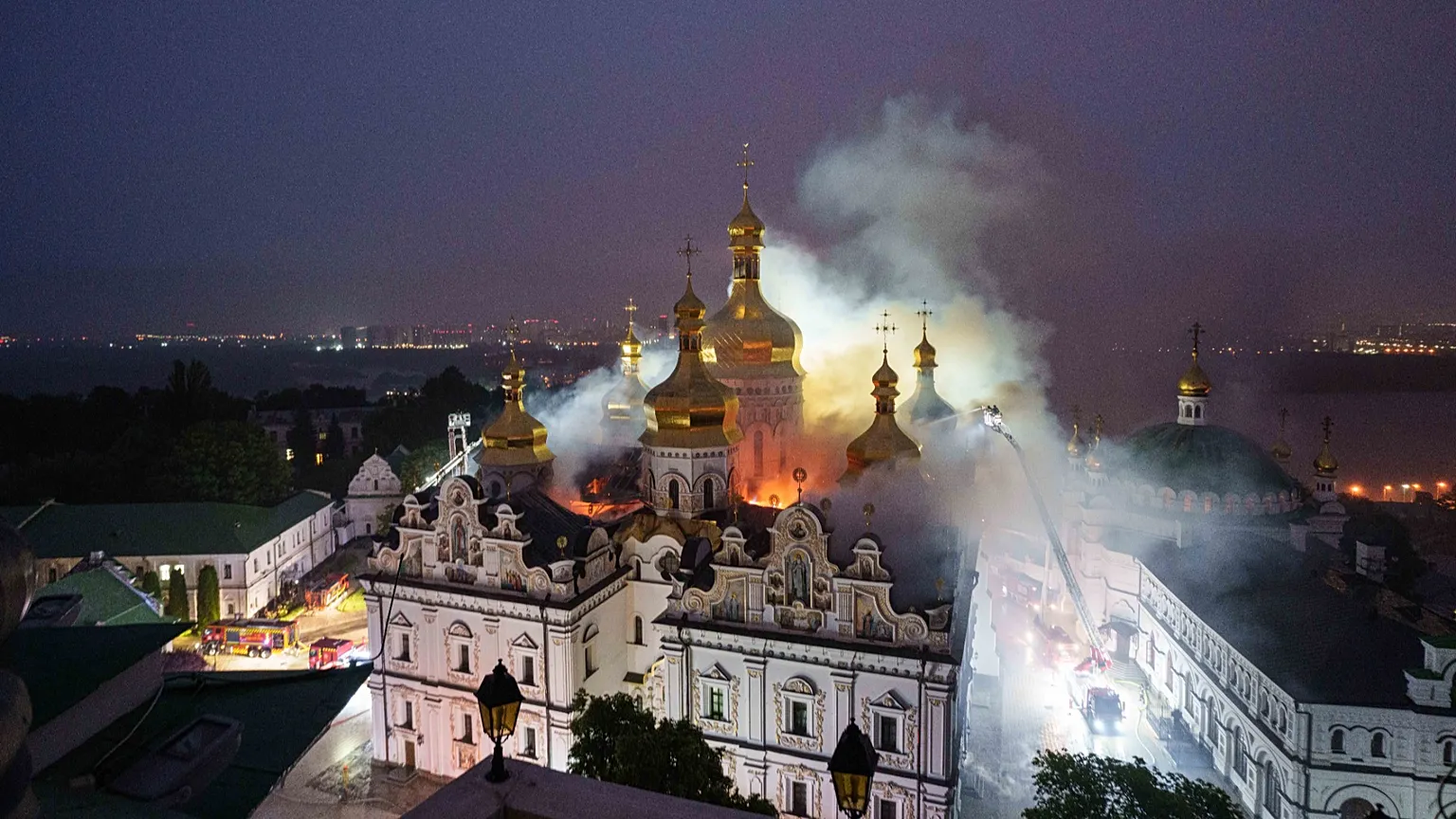
The digital landscape has become a battleground for narratives, particularly evident in the aftermath of the recent drone and missile barrage on Kyiv. Following an attack between June 14 and 15, which damaged the UNESCO-listed Kyiv-Pechersk Lavra and Oleksandr Dovzhenko Film Studios, a specific claim began circulating across social media platforms. Pro-Russian users disseminated images purporting to show photographers poised on rooftops, ready to document the strike on the historic monastic complex. These posts suggested the attack was a staged event orchestrated by Ukraine, a significant accusation given the site’s 11th-century origins and its status as one of Ukraine’s most important Orthodox-Christian landmarks.
The images, shared widely on platforms like X, Facebook, and TikTok, depicted men setting up camera equipment on a roof with a clear line of sight to the cathedral, while another showed a man photographing the aftermath, the roof seemingly engulfed in flames. These posts, some accumulating over 110,000 views in German and Greek, questioned the legitimacy of the attack, asserting that photography of bombardments is prohibited in Ukraine, yet these “photographers with professional equipment” were present precisely on that night. This narrative gained traction, fueling claims that Ukraine itself was responsible for the damage.
However, a closer examination of these viral images by Euronews’ fact-checking team, The Cube, revealed a critical detail: the presence of a SynthID watermark. This invisible digital marker, embedded in images generated by OpenAI’s AI models, effectively identified the pictures as artificially created. The revelation immediately cast doubt on the authenticity of the claims. Further scrutiny exposed visual inconsistencies within the images themselves; the cathedral’s roof, for instance, was depicted as green, a detail contradicted by verified photographs of the complex which show a brown roof, though some nearby buildings do feature green roofing.
Ukrainian authorities swiftly condemned the attack, with the Security Services (SBU) attributing the damage to a Russian Geran-2 unmanned aerial vehicle. Prime Minister Yulia Svyrydenko shared video footage from the aftermath, showing the Dormition Cathedral ablaze, underscoring the severity of the incident. Ukrainian President Volodymyr Zelenskyy characterized the strike as “one of Russia’s most serious crimes against Christian culture to date.” Foreign Minister Andrii Sybiha indicated that Ukraine would pursue action through UNESCO and other international bodies to demand accountability from what he termed “Russian terrorists.”
The Russian government, conversely, attributed the damage to Ukraine, specifically suggesting a US-made Patriot missile was responsible for the cathedral’s destruction. This counter-narrative, coupled with the AI-generated images, illustrates a broader pattern of information warfare surrounding the conflict. French President Emmanuel Macron also weighed in, stating on X that “just like the war of aggression that Russia has been waging against Ukraine for more than 4 years, nothing justifies this attack on our universal heritage,” emphasizing the international significance of the monastic complex. To date, no credible evidence has emerged to substantiate the claims that the attack was staged or that Ukrainian photographers possessed foreknowledge of the strike. The incident highlights the growing challenge of distinguishing authentic information from digitally manipulated content in real-time, particularly in conflict zones where narratives are constantly contested.


Sponsored Content

Sponsored Content