
Iran Escalates Strait of Hormuz Standoff Pushing US Into a Dangerous Trap Threatening Ceasefire

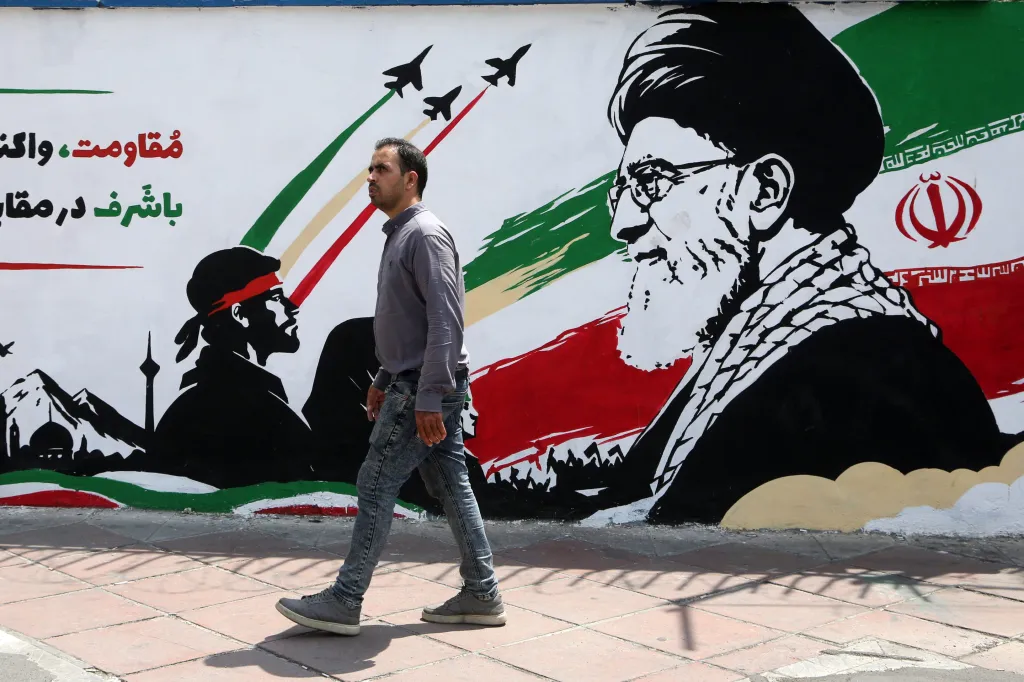
The Strait of Hormuz has become a flashpoint in recent days, with renewed hostilities between Iran and the United States threatening to unravel a fragile ceasefire established only weeks ago. Missiles, drones, and bombs continue to detonate across the Persian Gulf, challenging the integrity of the tenuous agreement. This latest escalation centers on Iran’s efforts to assert greater control over the vital energy chokepoint, directly confronting American interests and regional stability.
Sunday witnessed fresh attacks launched by Iran against Kuwait and Bahrain, accompanied by threats to entirely halt peace negotiations. These actions represent a continuation of a retaliatory cycle, following U.S. airstrikes that targeted the Iranian regime for its prior attacks on commercial vessels using drones. At the heart of Iran’s strategy is an attempt to disrupt an alternative shipping route through the Strait, a passage protected by the U.S. and designed to bypass the Tehran-backed channel. This alternate route, which traces the Omani coastline, recently expanded its capacity to accommodate both inbound and outbound traffic, thereby diminishing Iran’s traditional leverage over the Strait.
President Donald Trump has characterized Iran’s actions as a direct violation of the existing ceasefire, issuing warnings of severe repercussions. Despite these pronouncements, the President has also expressed a reluctance to engage in further military conflict, and similar threats in the past have not always been followed by immediate action. Robert Pape, a political science professor at the University of Chicago, observed that “Iran is choking Hormuz, forcing a brutal choice: escalate or surrender control.” Pape suggests that Iran is deliberately constructing an “escalation trap” for the U.S., implying that a collision course has been set with potentially graver outcomes ahead.
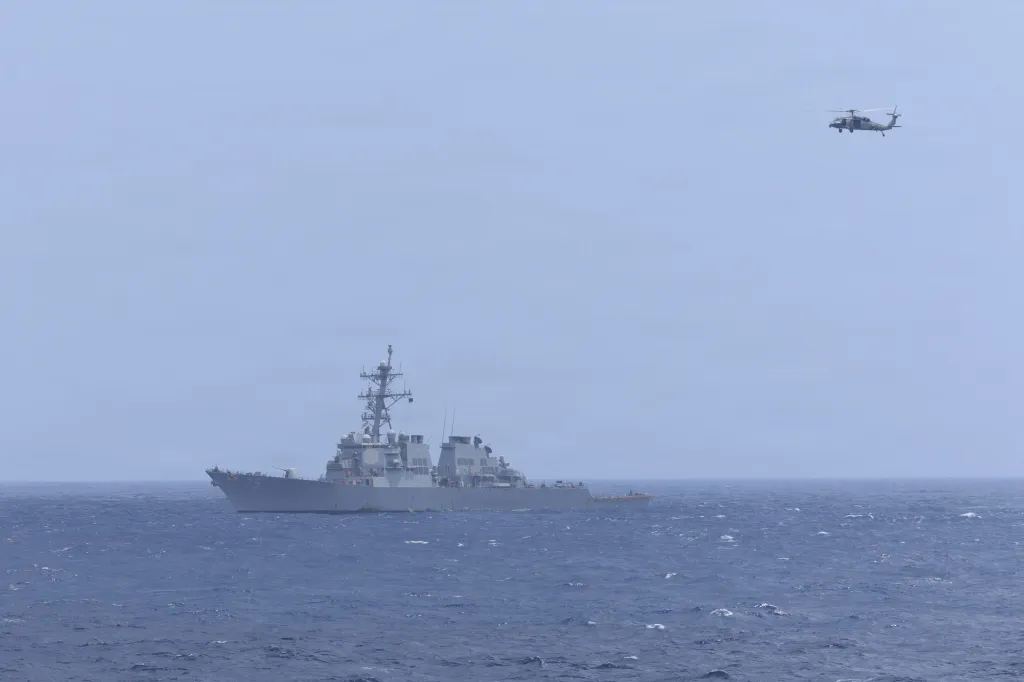
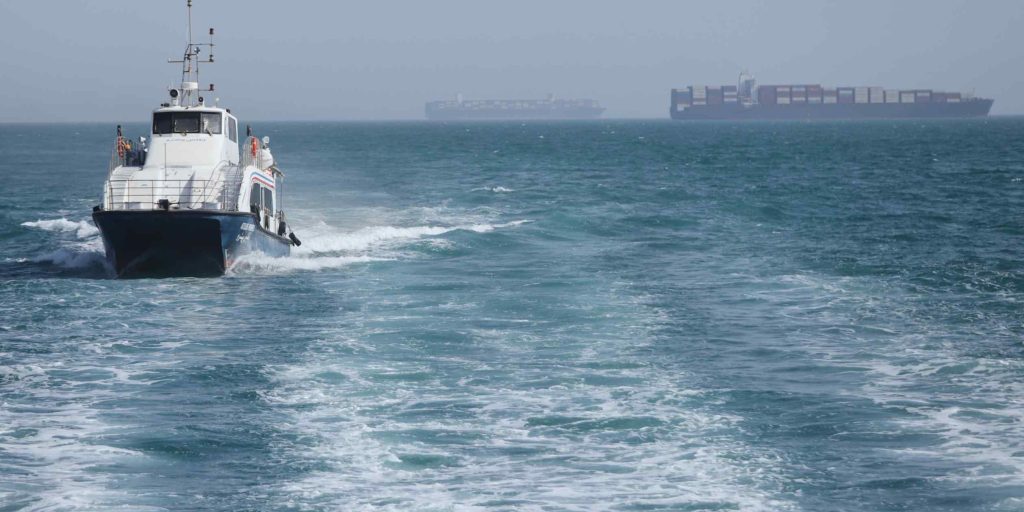
The U.S. Navy has visibly responded by demonstrating the continued safety of the alternate route. Gulf traffic data from Sunday revealed a convoy of tankers navigating the Strait under escort, their transponders actively broadcasting their positions. While some vessels may opt to disable their transponders to transit undetected, the looming threat of Iranian aggression alone could deter enough commercial shipping to effectively paralyze the waterway. HFI Research posits that Iran’s strategic objective is to compel the Strait to remain largely closed, thereby cutting off oil flows and forcing the U.S. to deplete its oil reserves. Such a scenario would significantly bolster Iran’s negotiating position, particularly in its broader aim to diminish the U.S. military presence in the region.
Commercial shipping companies now find themselves in a precarious dilemma. They face the choice of utilizing the alternate route and risking Iranian attacks, or opting for the regime’s channel and potentially incurring Western sanctions for transacting with the Islamic Revolutionary Guard Corps. Many vessels have little recourse but to use the alternate channel, often doing so discreetly. This situation implies that Iran may need to continually escalate its actions to achieve a complete halt in shipping flows. HFI Research further noted, “For the US, the fact that the Oman route might be blocked presents it with a big ultimatum: either the US escalates or gives IRGC control of the Strait of Hormuz.” The organization concludes that escalation is the most logical outcome, given the unlikelihood of the U.S. ceding control. However, with President Trump’s stated aversion to escalation, concerns remain that the IRGC could persist in its aggressive posture until it gains effective control.
Professor Francesco Sassi from the University of Oslo highlighted that Iran’s recent attacks specifically targeted a crucial workaround employed by Gulf oil producers: ship-to-ship oil transfers at sea, designed to circumvent the Strait of Hormuz entirely. Sassi views this development as an existential test for U.S. deterrence capabilities, particularly in its commitment to protecting allies such as Bahrain and Kuwait. He stated that the prospect of returning to the pre-conflict status quo is now definitively gone, declaring that “The war for the Strait of Hormuz has entered a highly dangerous new phase.” Sassi warned that following successive nights of U.S. retaliatory strikes against IRGC targets, a “shadow war” is rapidly expanding into the outer reaches of the Gulf. Noam Raydan, a senior fellow at the Washington Institute think tank, echoed this sentiment, emphasizing that Iran has no intention of reverting to business as usual in the Strait. Raydan explained that a return to pre-war conditions would strip Iran of its most potent remaining source of leverage, suggesting that policymakers must now focus on anticipating the justifications Tehran will present to secure a central role in any new maritime system, and the obstacles it will erect against alternative arrangements.
Related Posts
Previous Post
Next Post

Sponsored Content

Sponsored Content