
China’s Economic Powerhouse Still Lacks Financial Muscle to Rival America’s Global Dominance

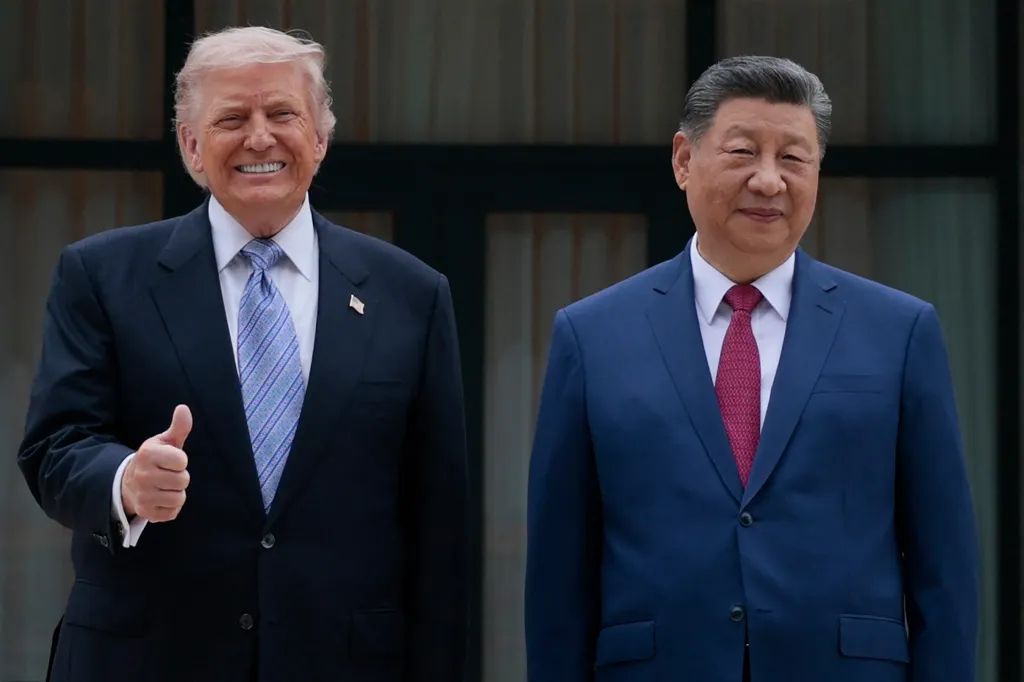
The global economic landscape often presents China as a formidable challenger, its industrial might fueling export dominance and its artificial intelligence capabilities nearing parity with leading models. Observers frequently highlight an increasingly advanced military and a growing diplomatic presence, particularly as the United States navigates complexities in regions like Iran and grapples with internal economic pressures. This narrative often casts America as a superpower in decline, yet a closer examination of financial metrics reveals a different story, one where the U.S. maintains a decisive, if sometimes overlooked, advantage.
Ruchir Sharma, the chair of Rockefeller International, recently articulated this distinction, pointing out that while China’s economic output is substantial, its financial system remains comparatively underdeveloped. He noted in an op-ed that the historical trajectory of global empires typically shows increasing economic clout leading to a currency taking a larger share of global reserves. However, China’s yuan, also known as the renminbi, accounts for merely 2% of central bank assets worldwide, a stark contrast to China’s 17% share of global GDP. Similarly, despite commanding 15% of global trade, the yuan is used in only 2% of international invoices.
The dollar, by comparison, continues to underpin the global financial system. It accounts for approximately 58% of global reserves, and while this share has seen some slight erosion, it still dominates. Furthermore, the dollar is used in 54% of trade invoices and nearly 90% of over-the-counter foreign exchange transactions. Sharma’s assessment suggests that China’s financial development lags 30 to 40 years behind the historical pace set by other emerging superpowers. This gap is particularly significant given the exponential growth of global finance, with the value of financial assets quadrupling over the past five decades.
This “exorbitant privilege” of dollar dominance offers the U.S. distinct advantages, allowing it to borrow more cheaply than its fiscal situation might otherwise permit. Beyond economic leverage, the U.S. has effectively weaponized the dollar through financial sanctions, a tool that the yuan cannot currently replicate. Sharma contends that China will remain an “incomplete superpower” until it can match this financial firepower, largely because its financial system has remained more tightly controlled than any other major nation for decades.
The impact of these controls is evident in foreign investment figures; less than 5% of China’s stocks and bonds are owned by foreign investors. Capital controls have also effectively contained a massive surge in domestic money supply, leading some to describe Chinese markets as a “local prison.” Beijing’s reluctance to relax these restrictions stems from a fear of capital flight, yet investors remain wary of China’s markets precisely because the yuan is not traded more freely. This creates a challenging paradox for Chinese policymakers.
Attempts to internationalize the yuan are certainly underway. Its use in the oil trade has seen an increase, and recent geopolitical events have spurred speculation about a potential shift from the “petrodollar” to a “petroyuan.” Data from the People’s Bank of China indicates a rise in yuan usage among global central banks, with $16.4 billion provided via foreign-exchange swap lines by the end of March, marking the largest quarterly increase in three years. The yuan has also climbed to become the fifth most active currency in global payments, according to the SWIFT financial platform. U.S. Treasury Secretary Scott Bessent has even suggested that currency swap lines can help reinforce the dollar’s dominance, highlighting the strategic importance of such financial mechanisms.
Despite these efforts, Sharma maintains that China must undertake a bolder liberalization of its financial system. He argues that less stringent controls could actually encourage capital inflows rather than triggering an exodus. Without such a robust opening, China’s ambition to fully challenge America’s financial dominance and achieve complete superpower status will likely remain unfulfilled. The path to true global financial influence demands a level of openness and free-market operation that China has, to date, been unwilling to fully embrace.
Related Posts

Previous Post
Next Post


Sponsored Content

Sponsored Content