
Russia Signals Openness to Putin-Takaichi Talks After Airspace Incident

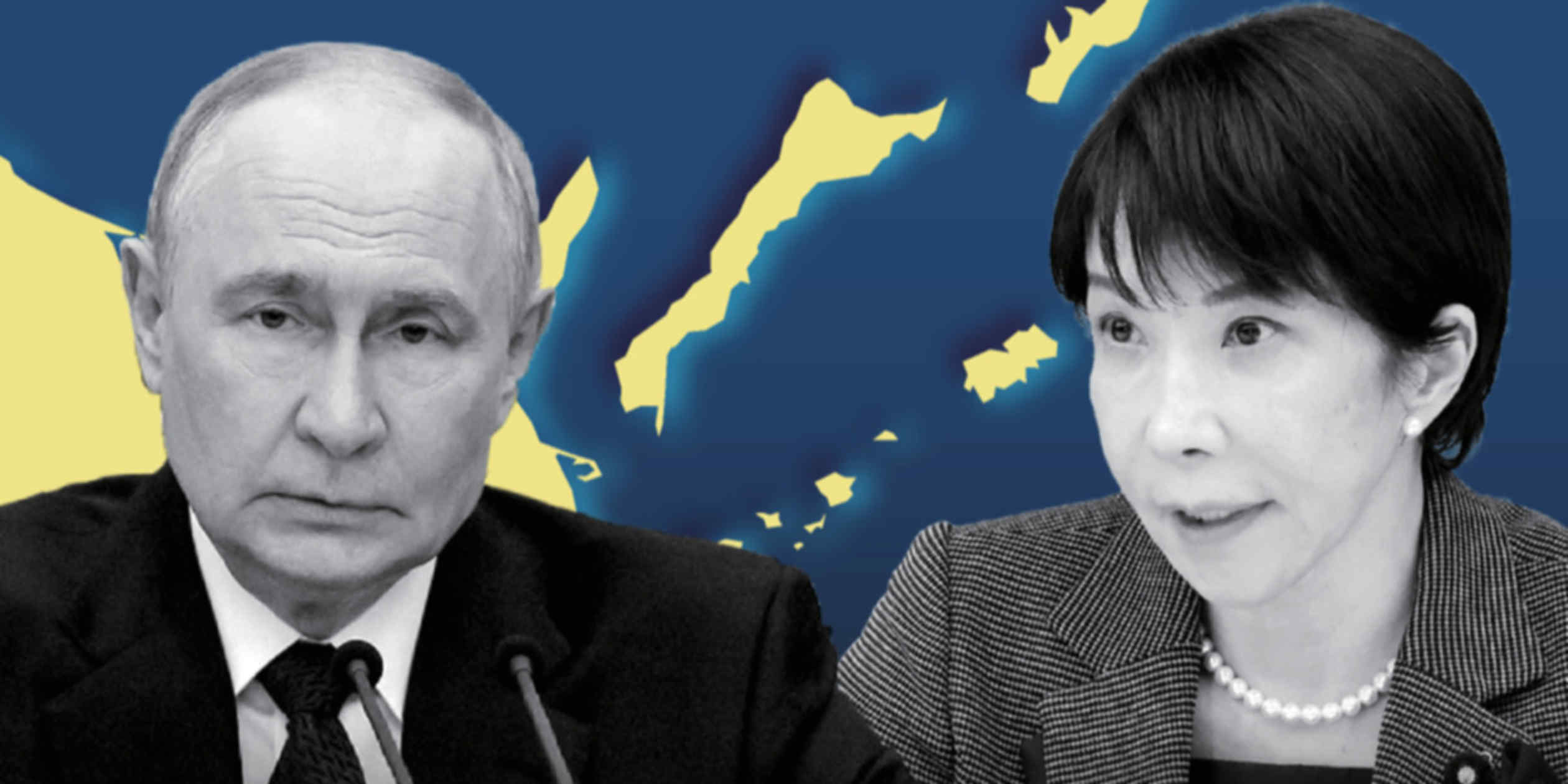
Moscow says a meeting between the Russian and Japanese leaders on the sidelines of the APEC summit is possible, even after suspected Russian aircraft entered Japanese airspace.
Moscow has indicated it is open to a conversation between Russian President Vladimir Putin and Japanese Prime Minister Sanae Takaichi at this week’s Asia-Pacific Economic Cooperation summit in China. The gesture comes after two suspected Russian military aircraft entered Japanese airspace near Fukuoka, raising tension days before the gathering.
A meeting would be the first top-level encounter between the two countries since Russia invaded Ukraine in 2022. Putin is expected to attend a trilateral summit with the U.S. and China at APEC, a setting that may give him leverage to press Tokyo for concessions.
Japan had requested a Takaichi-Putin meeting as the summit opened Wednesday but had not received a formal response. Kremlin spokesman Dmitry Peskov told Russia’s state-run Tass news agency on Monday that the leaders might still speak on the sidelines. “We do not rule out that they will be able to speak on the sidelines of the summit,” Peskov said.
A senior Japanese government official echoed the possibility, saying the two leaders would probably be able to make contact even briefly.
Tokyo’s agenda
Japanese Chief Cabinet Secretary Minoru Kihara said Tuesday that the two neighbors have many unresolved issues but must keep communicating. “There are many issues between Japan and Russia, but Russia is Japan’s neighbor, and we have to communicate to work toward resolving them,” he said.
Takaichi has protested Putin’s August visit to one of the southern Kuril Islands, territory Russia controls and Japan claims as the Northern Territories. Despite that dispute, her government appears to have concluded that direct communication is necessary.
The prime minister plans to ask Putin to release Yuki Imai, a journalist from Japan’s Hokkaido Shimbun newspaper detained by Russian security forces last month. She is also expected to urge Russia to revoke presidential decrees that placed Japanese Tobacco’s Russian subsidiaries under temporary local management.
Moscow is likely to push Tokyo to ease or lift economic sanctions and may raise objections to Japanese assistance for Ukraine.
Military pressure ahead of diplomacy
Russia has increased military pressure on Japan ahead of the possible talks, a move that seems designed to keep Tokyo off balance while signaling that Moscow will not bargain from a position of weakness.
Japan’s Defense Ministry said Tuesday that two suspected Russian military aircraft entered Japanese airspace off Fukuoka prefecture around 4 a.m., flying between Yonaguni, Japan’s westernmost inhabited island, and Taiwan toward the Pacific. Japan scrambled Air Self-Defense Force fighters in response.
“This is not only a severe violation of Japan’s sovereignty, but also a threat to security,” Defense Minister Shinjiro Koizumi told reporters. Tokyo has lodged a strong protest through diplomatic channels and called on Russia to prevent a recurrence.
Taiwan’s Ministry of National Defense also reported that two Russian military planes entered the island’s air defense identification zone from the northeast that morning.
“While we protest the airspace incursion, the door to dialogue is still open,” a senior Japanese official said.
The two countries’ foreign ministers, Toshimitsu Motegi and Sergey Lavrov, met in the U.S. last month, the first such meeting in five years.