

SpaceX Revenue Soars Past Estimates as Starlink Drives Unexpected Financial Strength

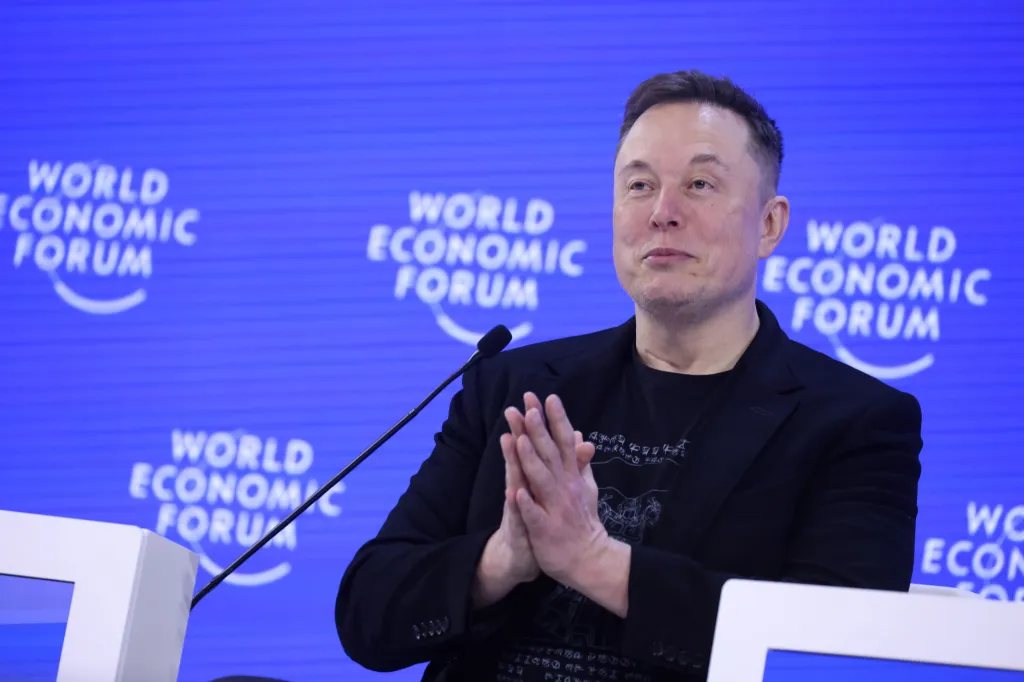
SpaceX recently reported a significant financial uplift, with second-quarter revenue reaching $7.8 billion, a 92% increase year-over-year. This figure substantially outpaced Wall Street’s consensus estimate of approximately $6.9 billion, marking a robust performance in the company’s first earnings report since its Nasdaq debut in June. While the revenue surge was notable, the company still posted a net loss of $541 million, or 9 cents per share, though this represented a considerable improvement from the $1 billion loss recorded in the same period last year. Adjusted EBITDA nearly tripled, climbing to $3.5 billion. Despite these strong operational results, SpaceX shares experienced a decline in after-hours trading, falling more than 7% following the announcement.
This financial disclosure arrives at a critical juncture for SpaceX, whose stock price had already seen a roughly 50% decrease from its peak of $211, reached mere days after its June 12 IPO. Investor concerns regarding substantial capital expenditures and the pace of return on significant investments have cast a shadow over many technology stocks recently, even as broader markets showed signs of recovery on Tuesday. A key point of inquiry for investors during the earnings call centered on SpaceX’s capital spending, which hit an extraordinary $18.4 billion in the second quarter alone. A substantial portion, $15.8 billion, was allocated to the AI segment. This quarterly expenditure translates to an annualized run rate of $73.5 billion, significantly surpassing the $48.7 billion capital expenditure consensus analysts had anticipated for the quarter. Historically, investors have shown limited patience for elevated spending without clear signs of accelerated revenue growth and improved free cash flow, a sentiment reflected in the after-hours trading dip.
The second-quarter results highlight a strengthening AI trade for SpaceX, underpinned by a $1 billion top-line beat and a doubling of Starlink’s subscriber base compared to the previous year. New cloud-computing contracts played a pivotal role, propelling the AI segment into positive adjusted EBITDA territory for the first time. Starlink, often considered SpaceX’s primary revenue driver, generated $4.29 billion in quarterly revenue, a 66% increase year-over-year. Its operating margin stood at 38.6%, exceeding analyst expectations of 35.9%. By the close of the second quarter, Starlink boasted 12 million subscribers, doubling its count from a year prior and adding 1.7 million new subscribers since the first quarter. The average revenue per user remained stable at $66 per month. Furthermore, enterprise and government revenue within Starlink demonstrated robust growth, expanding by 108% year-over-year to $1.8 billion, bolstered by partnerships with major airlines like American Airlines, Southwest, and Virgin Atlantic, alongside over $6 billion in contracts with the U.S. Space Force.
Beyond the immediate financial figures, the release of these quarterly numbers triggers the opening of a lockup provision. This allows pre-IPO shareholders to begin selling a portion of their holdings, which could introduce further downward pressure on the stock. An even more substantial release of insider shares is anticipated after the third-quarter results later this year, when approximately 900 million additional shares will become unlocked—a volume larger than the entire initial public offering. SpaceX currently holds a $100 billion cash reserve and recently secured an additional $25 billion through a bond offering, providing considerable financial flexibility. However, investors are likely to scrutinize how quickly these substantial investments will translate into tangible revenue streams.
The AI segment also showed considerable expansion, with revenue growing 247% year-over-year to $2.6 billion, largely fueled by $14.1 billion in new cloud services agreements. Compute capacity expanded significantly, reaching 1.4 gigawatts from 0.4 gigawatts a year ago. Despite this growth, the AI segment still recorded an operating loss of $1.26 billion, though this marked an improvement from the $2.47 billion loss in the first quarter. During the earnings call, founder and CEO Elon Musk indicated that the company’s internal revenue projections had been revised upward since the June IPO. Musk stated that internal targets for reaching $1 trillion in revenue—not annualized run rate—have been advanced from 2031 to 2030, with a “non-zero chance” of achieving this by 2029. Chief financial officer Bret Johnson also remarked that the $100 billion annual recurring revenue (ARR) target for December is now within reach, attributed to new cloud contracts and SpaceX’s pending acquisition of Cursor. Achieving the $1 trillion revenue goal would necessitate a tenfold increase in three to four years, a formidable undertaking given that even optimistic analysts have projected less than half that figure for 2030.
Musk expressed confidence that the substantial revenue gap, approximately $981 billion, would be closed by the company’s next-generation V3 satellite, which he described as “an order of magnitude more capable” than the current version. He posited that even if monetization per bit dropped tenfold, it would still result in a significant increase in Starlink’s revenue, suggesting that Starlink could eventually deliver the majority of the world’s internet. Musk also highlighted AI growth, noting SpaceX’s exclusive partnership with Nvidia for its compute infrastructure, based on his belief in Nvidia’s Vera Rubin architecture. He announced plans to launch an orbital AI satellite next year, aiming to establish AI data centers in orbit and thereby substantially reduce costs compared to ground-based competitors.
Related Posts


Sponsored Content

Sponsored Content