

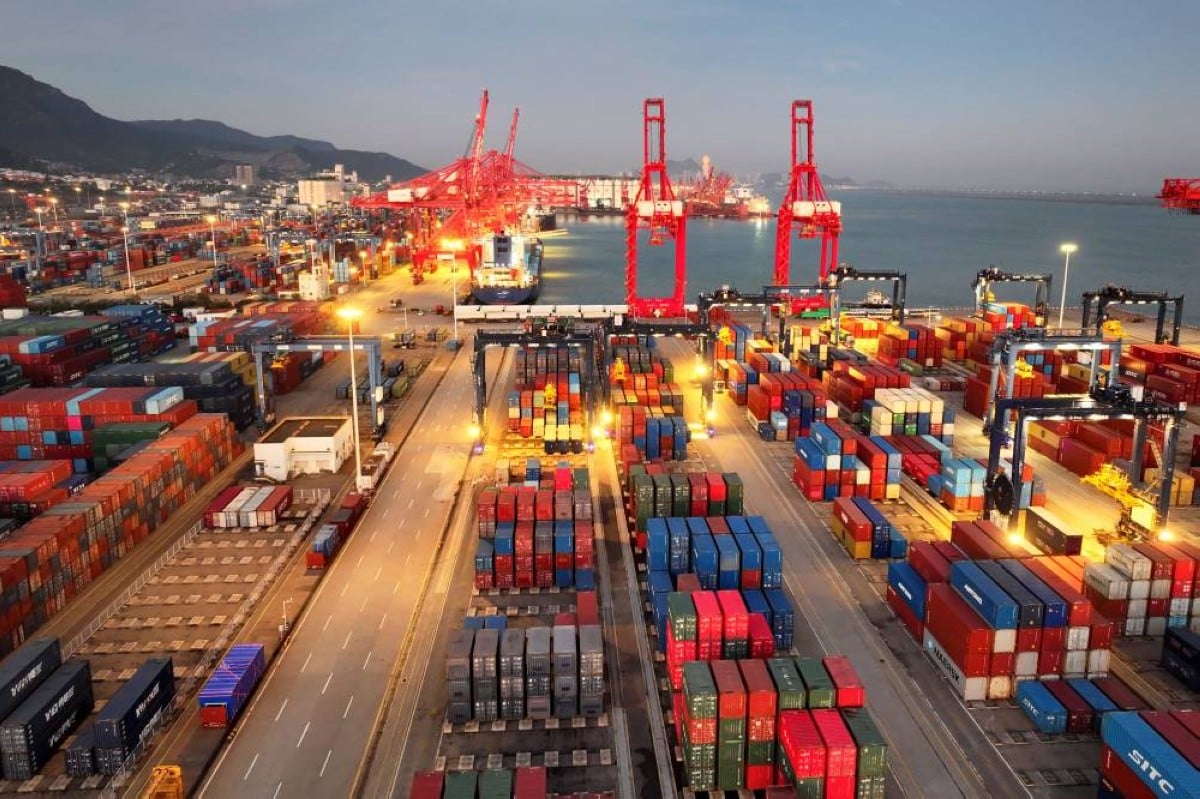
China's trade surplus swelled past $1 trillion in the first ten months of 2026, reaching the milestone a month earlier than the previous year as exports surge and the imbalance with the European Union widens.
China’s annual trade surplus surpassed $1 trillion by the end of October, official data showed, becoming only the second time the country has crossed that threshold and doing so a month earlier than in 2025. The milestone underscores how exports have become the dominant engine of Chinese growth at a time when domestic demand and the property sector remain subdued.
Exports jumped 35.2 percent year-on-year to $412.3 billion in October, while imports rose 41.6 percent to $307.1 billion, according to the General Administration of Customs. The resulting monthly surplus of $105.3 billion was the smallest since May, but it was enough to push the year-to-date surplus to $1.04 trillion.
AI and global demand drive the boom
Much of the export strength has come from soaring global demand for artificial intelligence-related hardware. Chinese factories are shipping large volumes of computer chips, data center servers, networking equipment and other electronic components that power AI infrastructure around the world. That demand has helped offset softer consumption at home and persistent weakness in real estate.
Exporters have been the key driving force behind China’s economy this year, said Zhiwei Zhang, president and chief economist at Pinpoint Asset Management. I expect they will continue to perform well in the foreseeable future.
Widening imbalance with Europe
The surplus is not spread evenly across trading partners. China’s imbalance with the European Union reached $310.7 billion in the January-October period, up sharply from $241.6 billion a year earlier. The EU now accounts for nearly a third of China’s overall trade surplus, intensifying pressure on Brussels to respond.
French President Emmanuel Macron has warned that Europe could impose tariffs if Beijing does not reduce the imbalance. Talks in Beijing last month between EU trade chief Maros Sefcovic and Chinese counterpart Wang Wentao produced a preliminary agreement to limit exports of hybrid vehicles to Europe, but the broader surplus continues to grow.
US trade picture shifts
Exports to the United States surged 32.9 percent in October compared with a year earlier, a notable reversal from earlier periods when US-bound shipments declined. The improvement comes as President Xi Jinping and President Donald Trump maintain a fragile truce in their trade war, with both leaders scheduled to meet again at the APEC summit in Shenzhen later this month.
The truce has lowered some tariffs and eased fears of an immediate escalation, but the average US tariff on Chinese goods remains high enough that exporters continue to reroute trade through third countries and prioritize non-US markets.
Beijing's growth calculus
China's leaders are relying on exports to help hit an official growth target of around 4.5 to 5 percent this year, the lowest in decades. Domestic consumption has been slow to recover, inflation remains below the official target of roughly 2 percent, and the property sector continues to weigh on investment and household wealth.
Import growth of more than 40 percent in October suggests some pickup in domestic demand for raw materials and components, but the pace still lags export growth by a wide margin. As long as that gap persists, the surplus will keep expanding and so will the political friction that comes with it.
What comes next
At the current pace, China's full-year surplus is set to exceed last year's record of $1.2 trillion. The question is whether trading partners will respond with new tariffs, quotas or other restrictions before the year ends.
The next flashpoint is the Xi-Trump meeting at APEC. Any sign that the truce is fraying could quickly reverse the recent improvement in US-bound trade. For now, the data show a Chinese export machine that is still running well ahead of the rest of the economy.