

India’s Economic Outlook Dims as Energy Crisis Fuels Investor Jitters and Growth Concerns


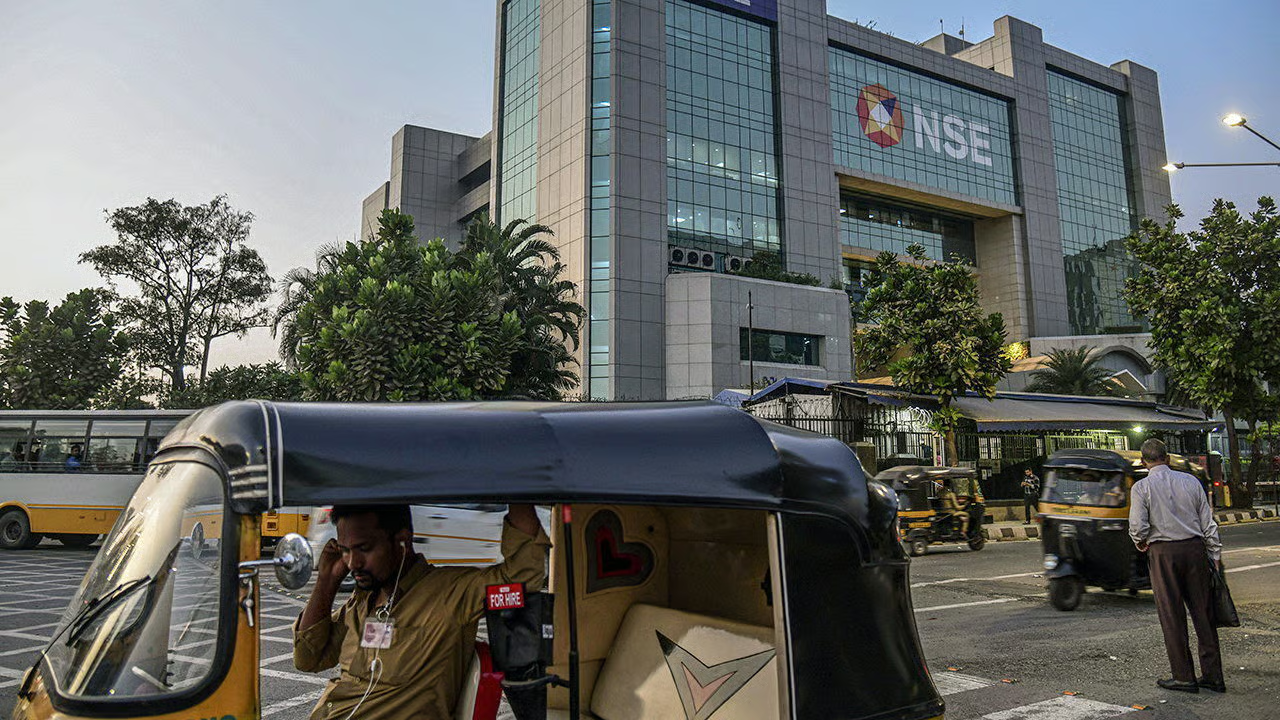
The Bombay Stock Exchange saw significant declines this past week, particularly in sectors highly sensitive to energy prices, as concerns over global crude oil volatility began to echo through India’s financial markets. This downturn reflects a growing apprehension among investors regarding the potential for sustained high energy costs to impede the nation’s economic recovery and future growth prospects. The benchmark Sensex, after a period of robust performance, registered its steepest weekly fall in months, a clear indicator that the optimism surrounding India’s post-pandemic rebound is now being tempered by external pressures.
Analysts are pointing to the sharp increase in international crude oil prices, exacerbated by geopolitical tensions and supply chain disruptions, as a primary catalyst for this shift in sentiment. India, a net importer of crude oil, is particularly vulnerable to such shocks. Higher import bills not only strain the country’s current account deficit but also translate into elevated domestic fuel prices, which in turn feed into inflationary pressures across various sectors. The ripple effect is already being felt, with transportation costs rising and manufacturers facing increased operational expenditures, ultimately impacting consumer purchasing power.
The Reserve Bank of India (RBI) has been navigating a delicate balance, attempting to support growth while also taming inflation. However, the external energy shock complicates this endeavor considerably. Should crude prices remain elevated, the RBI might face increased pressure to tighten monetary policy more aggressively than initially anticipated, potentially slowing down credit growth and investment. This scenario, while necessary to stabilize prices, could inadvertently stifle the very economic momentum the government and the central bank have worked to cultivate.
Foreign institutional investors, often a significant driver of liquidity in Indian markets, have shown signs of withdrawing capital, further contributing to the market’s subdued performance. Their cautious stance is not unique to India; emerging markets globally are grappling with the implications of rising inflation and potential interest rate hikes in developed economies. However, India’s specific reliance on imported energy makes it particularly susceptible to these global headwinds, prompting a re-evaluation of investment strategies by international funds.
Domestically, the energy shock threatens to derail the recovery of small and medium-sized enterprises (SMEs), many of which are still grappling with the lingering effects of the pandemic. These businesses often operate on thinner margins and are less equipped to absorb sudden increases in input costs. A prolonged period of high energy prices could lead to reduced production, job losses, and a slowdown in overall economic activity, creating a challenging environment for millions of Indian households. The government’s fiscal space to offer significant relief may also be constrained, given existing commitments and the need to maintain fiscal prudence.
Looking ahead, the trajectory of global energy prices will be a critical determinant for India’s economic performance in the coming quarters. While the underlying fundamentals of the Indian economy remain robust in many areas, the immediate future appears clouded by the pervasive influence of the energy crisis. Policymakers and businesses alike are now closely watching international developments, understanding that sustained stability in energy markets is paramount for India to regain its growth momentum and navigate the complex global economic landscape. The current market jitters serve as a potent reminder of the interconnectedness of the global economy and the far-reaching impact of commodity price fluctuations on national economies.

Related Posts


Previous Post
Next Post
Sponsored Content

Sponsored Content