
Europe’s Strategic Miscast: Why the EU Cannot Lead Ukraine’s War Effort—and Who Should

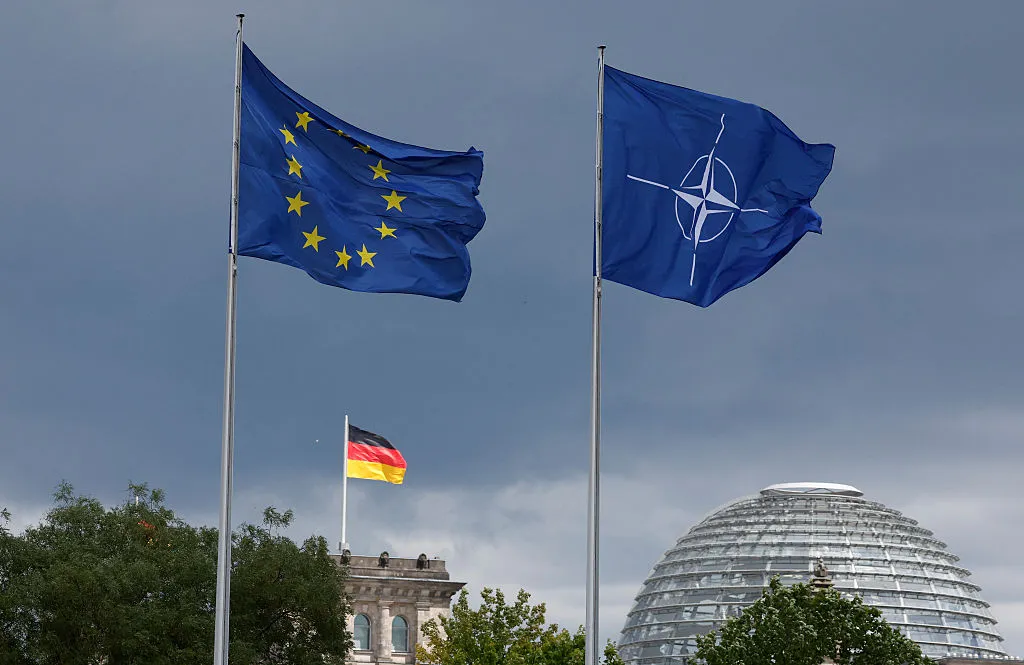
As the war in Ukraine grinds into another year, the political and strategic center of gravity behind Kyiv’s support apparatus is shifting in ways that expose a difficult truth: the European Union is not the power player Ukraine needs at this moment in history. Despite its diplomatic ambitions, financial weight, and narrative of continental unity, the EU lacks the military coherence, institutional agility, and geopolitical decisiveness required to confront a revisionist Russia.
The war has illuminated Europe’s structural weaknesses with unforgiving clarity. Brussels can sanction, coordinate, and convene—but it struggles to deter, command, or mobilize. Ukraine’s survival, and Europe’s own security, depend on capabilities the EU does not possess: hard military power, unified strategic doctrine, and the willingness to take on direct geopolitical risk.
This is not an indictment of Europe’s intentions, which are sincere, nor a dismissal of its contributions, which have been substantial. Rather, it is a recognition that the architecture of the EU was never designed to lead a war, let alone one involving the continent’s largest military threat. The bloc is a political and economic union—not a defense actor capable of shaping wartime outcomes in real time.
If Ukraine is to prevail, leadership must come from elsewhere: the United States, NATO as an institution, individual European states with military weight, and a coalition of countries willing to assume real risk. The EU can support this effort—but it cannot direct it.
A Union Built for Peace—Not War
The origins of the EU are rooted in postwar reconciliation, economic integration, and institutional cooperation. Its foundational logic was to ensure that war within Europe would become not only unthinkable but materially impossible.
This created astonishing stability and prosperity—but at a cost.
The EU does not have:
- a unified army
- a wartime command structure
- rapid decision-making mechanisms
- centralized procurement power
- coercive authority over defense budgets
- tools for military escalation or deterrence
The EU’s treaty framework explicitly avoids binding military obligations. Defense remains a national prerogative.
In essence:
The EU was built to prevent war inside Europe—not to confront war on Europe.
Ukraine’s fight has brutally exposed this limitation.
The EU Provides Money and Sanctions, but Not Military Hard Power
To its credit, the EU has delivered:
- over €90 billion in financial and humanitarian assistance
- several rounds of sanctions
- joint ammunition procurement attempts
- macro-financial stabilization packages
- political and diplomatic support
- training programs
These contributions matter. They keep Ukraine’s state functional and apply pressure on Russia’s wartime economy.
But they do not win battles.
What Ukraine needs most:
- air defense
- deep-strike missiles
- heavy armor
- fighter jets
- sustained artillery production
- cyber and intelligence integration
- assured long-term military commitments
These are areas where the EU cannot deliver at scale.
The member states—not Brussels—control the tanks, jets, missile systems, and production lines.
Consensus Decision-Making Has Become a Strategic Handicap
The EU’s decision-making model, designed to ensure unity among diverse member states, becomes paralysis under wartime urgency.
Unanimity requirements allow single states to derail major policies.
Hungary has:
- blocked sanctions
- delayed financial aid
- threatened to veto Ukraine accession tracks
- undermined unity on Russia policy
The EU cannot function as a wartime actor when one or two capitals can halt the entire machinery.
In war:
Speed matters.
Decisiveness matters.
Coercive capacity matters.
The EU has none of these.
Ukraine Needs a Military Coalition—Not an Economic Union Leading Strategy
Leadership in Ukraine’s war effort must come from those who possess real military power:
1. The United States
Still the backbone of Western defense capability:
- ISR
- long-range missiles
- artillery
- precision munitions
- training
- air defense
- financial support
2. NATO
The institution designed for European defense:
- integrated command
- logistics coordination
- interoperability
- deterrence doctrine
- troop deployments
3. The U.K., Poland, France, Germany, and the Nordics
States with:
- heavy weapons
- air forces
- defense production
- intelligence capabilities
- strategic autonomy
These actors can shape battlefield realities in ways Brussels cannot.
Why the EU’s Ambitions Outstrip Its Capabilities
Ursula von der Leyen and Brussels technocrats have tried to position the EU as a geopolitical actor. But capability, not rhetoric, defines power.
What the EU says it wants:
- strategic autonomy
- European sovereignty
- a defense union
- a common military vision
What the EU actually has:
- fragmented defense markets
- underfunded militaries
- political divisions
- procurement inefficiencies
- a lack of strategic culture
Europe spends nearly €240 billion annually on defense—roughly the same as China.
Yet it gets a fraction of the military power because it buys 27 different versions of everything.
The EU talks about power in geopolitical terms but operates like a regulatory body.
Ukraine Is Becoming the Test of Europe’s Future—and the EU Is Not Passing
The war has forced a reckoning:
1. Europe realizes how dependent it is on the U.S.
Without American support, Ukraine’s front would collapse.
2. Europe realizes its defense industry is unprepared.
Ammunition production remains far below wartime needs.
3. The EU realizes it lacks a unified geopolitical vision.
Member states disagree on:
- escalation
- negotiations
- war aims
- Ukraine’s accession
- Russia policy
4. Europe realizes the gap between political rhetoric and military capability.
The EU can set long-term frameworks, but it cannot win wars today.
Who Should Lead Instead? The Real Power Centers Emerging in Ukraine’s Defense
A new hierarchy is forming around Ukraine’s war effort:
1. The U.S. remains the central pillar.
2. NATO integrates logistics and coordination.
3. Poland and the Baltics represent moral and strategic clarity.
4. The U.K. projects military decisiveness outside the EU framework.
5. France and Germany supply industrial scale, albeit slowly.
6. Nordic countries bring high-end capabilities—cyber, air, naval.
These actors collectively shape outcomes in ways Brussels cannot.
The EU’s Role Going Forward: Supportive, Not Strategic
The EU still matters greatly to Ukraine. But only in certain functions:
- economic stabilization
- reconstruction financing
- sanctions
- refugees
- energy integration
- long-term institutional alignment
These are strengths the EU should embrace—not try to replace NATO or U.S. leadership with roles it is structurally incapable of fulfilling.
Conclusion: The EU Must Accept Its Limits to Be Effective
The European Union is indispensable to Ukraine’s long-term future.
But it is the wrong institution to lead Ukraine’s war effort in the present.
War requires:
- speed
- command
- unified strategy
- military power
- risk tolerance
The EU has none of these.
Instead of overreaching, Brussels should focus on what it does best—economic power, political cohesion, and long-term support—while allowing NATO, the U.S., and militarily capable member states to drive wartime strategy.
By recognizing its limitations, the EU can strengthen—not weaken—Europe’s collective response.
The future of Ukraine depends not on forcing the EU into a role it cannot perform, but on letting each institution do what it is best suited to do.

Related Posts
Sponsored Content

Sponsored Content