
European Power Trio Heads to Kyiv: Leaders of France, Germany, and the UK to Meet Zelenskiy Amid Intensifying War Pressures

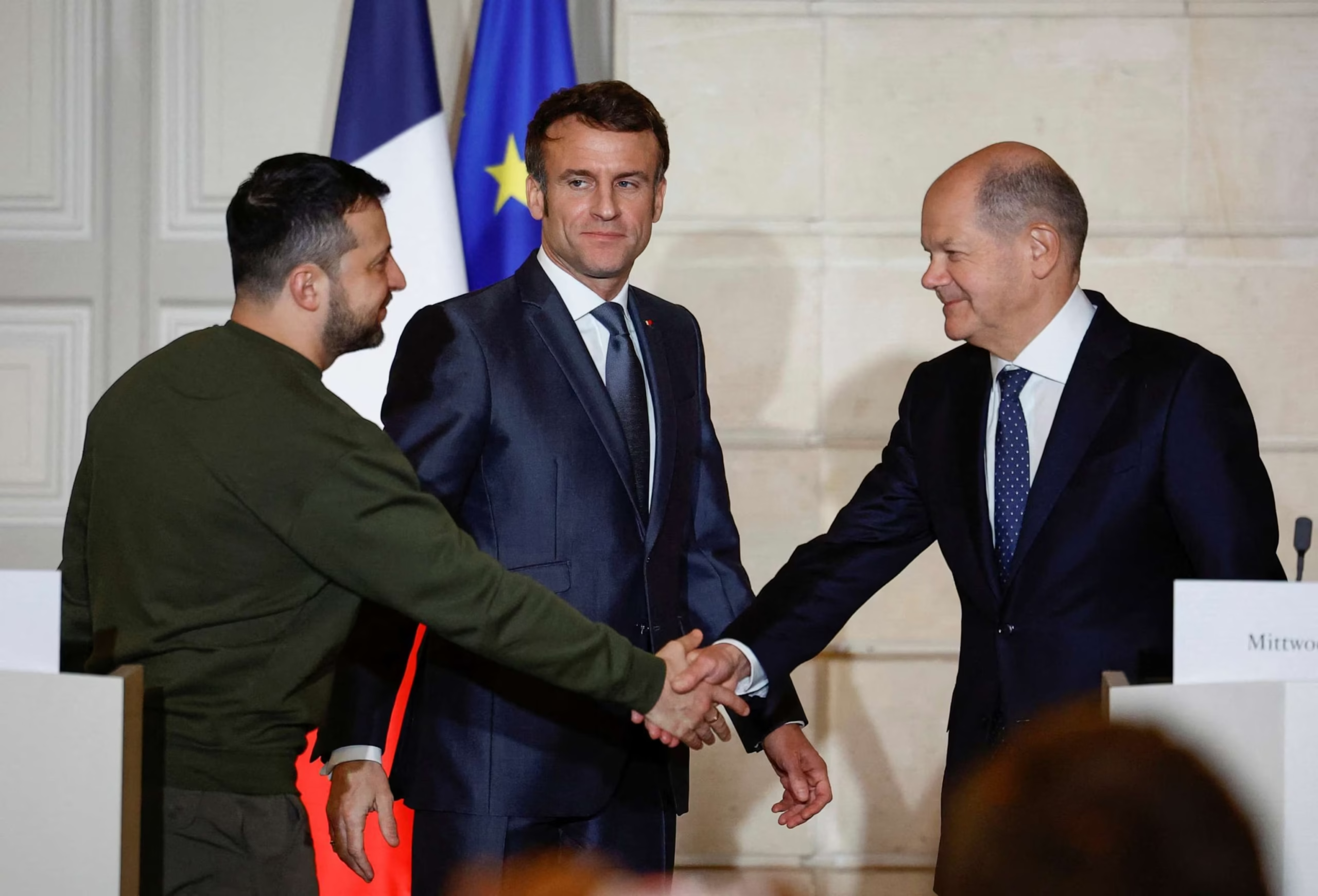
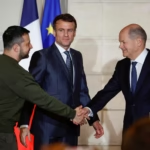
The leaders of France, Germany, and the United Kingdom are set to arrive in Kyiv on Monday for a high-stakes meeting with Ukrainian President Volodymyr Zelenskiy, marking one of the most symbolically unified demonstrations of European support since Russia’s full-scale invasion began nearly four years ago. The summit underscores Europe’s deepening commitment to Ukraine’s defense but also reflects the mounting diplomatic, military, and economic pressures facing both Kyiv and its Western partners.
As the war enters its next decisive phase—and as questions grow about long-term Western aid, battlefield strategy, and the prospects of a negotiated settlement—the rare joint visit by three of Europe’s most influential leaders signals renewed urgency to coordinate policy and reinforce resolve.
A Critical Moment for Ukraine and Europe
The meeting comes at a time when Ukraine is confronting significant challenges:
- Intensified Russian offensives along multiple fronts
- Strains on energy infrastructure following repeated missile and drone attacks
- A need for sustained defense financing and ammunition supplies
- Political uncertainty in Western capitals regarding long-term commitments
- Growing domestic fatigue as the war stretches into its fourth year
Against this backdrop, Kyiv is seeking assurances that Europe remains aligned on military aid, sanctions, economic support, and diplomatic strategy.
For Europe’s three major powers, the visit is more than symbolic—it is an effort to reaffirm strategic unity and demonstrate that Europe will not allow momentum to shift decisively in Russia’s favor.
Why This Meeting Matters: A Unified Front Amid Divergent Pressures
Although the UK, France, and Germany all back Ukraine, their approaches to military support and diplomatic strategy have at times differed.
France: Advocating Strategic Boldness
President Emmanuel Macron has been one of Europe’s strongest voices for deeper, long-term strategic support for Ukraine. His administration has floated proposals for increased European defense initiatives, new security guarantees for Kyiv, and the possibility of using frozen Russian assets to fund Ukrainian reconstruction.
Germany: Europe’s Economic Engine, Cautious but Essential
Berlin remains Kyiv’s largest European financial and military donor, but internal political debates—particularly regarding heavy weapons deliveries, energy policy, and relations with Russia—continue to shape Germany’s posture. Chancellor Olaf Scholz’s presence in Kyiv sends a message of continuity amid domestic pressures and coalition disagreements.
United Kingdom: Leading on Military Assistance
The UK has been among the earliest and most assertive suppliers of Ukrainian weaponry, from anti-tank missiles to long-range drones and advanced training programs. London’s role serves as both strategic partner and political signal: regardless of EU membership, the UK aims to remain a core defender of European security.
Despite differences in emphasis, all three nations share one overriding interest: preventing Russia from achieving strategic victory in Ukraine.
Likely Agenda for the Kyiv Summit
The leaders’ discussions with President Zelenskiy are expected to cover a comprehensive set of issues central to Ukraine’s resilience and the broader geopolitical balance in Europe.
1. Military Aid and Ammunition Production
Ukraine urgently needs artillery shells, air-defense interceptors, drones, and armored vehicles. European defense industries have been scaling up production, but supply gaps remain.
The three leaders are expected to jointly announce:
- Expanded munitions deliveries
- New funding for joint EU and UK production facilities
- Enhanced air-defense systems to counter ongoing Russian strikes
2. Winter Energy Security
With Russia continuing to target Ukraine’s electricity grid, Europe is preparing to supply:
- Emergency transformers and grid components
- Mobile power units
- Winterized energy infrastructure support
The meeting may also produce commitments for long-term reconstruction planning.
3. Sanctions and Economic Pressure on Russia
The leaders are discussing ways to tighten enforcement of sanctions, limit Russia’s access to Western technologies, and target networks helping Moscow evade restrictions.
The use of frozen Russian assets continues to be a contentious but central topic.
4. Ukraine’s Path to EU and NATO Integration
While full NATO membership remains a longer-term prospect, Europe is working to accelerate Ukraine’s EU accession process. Discussions may include updated timelines and benchmarks.
5. Diplomatic Coordination and Future Peace Frameworks
All four parties recognize that defeating Russian aggression requires not only battlefield success but diplomatic clarity. The meeting will explore potential formats for future international peace summits.
An Important Message to Moscow
The joint visit is designed to send a direct signal to the Kremlin:
- Europe remains united despite economic challenges
- Military aid will continue
- Russia cannot outlast Western support through attrition or winter hardship
- European leaders reject any diplomatic solution imposed through military coercion
Moscow has repeatedly attempted to exploit divisions within Europe, but coordinated actions like this summit undercut that strategy.
Domestic Pressures Complicate European Diplomacy
While the leaders aim to project unity, each faces domestic constraints:
- Macron confronts political opposition and public war fatigue over rising defense spending.
- Scholz faces divisions inside his coalition and pressure from both dovish and hawkish factions.
- The UK Prime Minister must navigate economic pressures and political volatility ahead of an election cycle.
Despite these challenges, their joint appearance in Kyiv is intended to demonstrate that core European strategic interests transcend domestic politics.
Ukraine’s Diplomatic and Strategic Calculus
For President Zelenskiy, the visit provides an opportunity to:
- Secure new commitments to stabilize the battlefield
- Reinforce his government’s political legitimacy
- Assure the public that Western support remains strong
- Demonstrate that Ukraine retains decisive international backing
It also offers a chance to shape Europe’s long-term strategic thinking about the conflict—and ensure that Ukraine remains a central priority for Western policymakers.
Conclusion: Europe’s Leadership Steps Forward at a Pivotal Time
The planned meeting between Zelenskiy, France’s president, Germany’s chancellor, and the UK prime minister highlights the defining geopolitical challenge of Europe’s era. With the war entering a critical phase and global attention increasingly divided among other crises, European leaders are signaling that the defense of Ukraine is not merely a regional issue but a cornerstone of European security.
The success of Monday’s summit will be measured not only in public statements but in sustained commitment—military, political, and economic—over the months ahead. As Europe grapples with its most significant security crisis in generations, the unity displayed in Kyiv may become a central moment in shaping the continent’s future.


Sponsored Content

Sponsored Content