
Japanese Prime Minister Sanae Takaichi Seeks Early Meeting with President Trump as China Tensions Persist

Tokyo is preparing for a delicate diplomatic balance in 2026, as Japanese Prime Minister Sanae Takaichi aims to solidify ties with the United States while simultaneously navigating complex relations with China. The strategic imperative for Japan involves not only maintaining its long-standing alliance with Washington but also seeking avenues to mend what have become increasingly frayed connections with Beijing. This dual approach underscores the intricate geopolitical landscape of the Indo-Pacific region, where economic interdependence often clashes with security concerns.
The anticipated visit by a U.S. leader to Beijing in April adds another layer of urgency to Tokyo’s diplomatic efforts. Prime Minister Takaichi’s administration is keen to showcase the robust bilateral relationship between Japan and the United States ahead of that high-profile engagement. This pre-emptive demonstration of unity is designed to project stability and shared strategic interests, particularly as regional dynamics continue to evolve. The objective is to convey a clear message regarding the strength of the U.S.-Japan alliance, a cornerstone of security in East Asia.
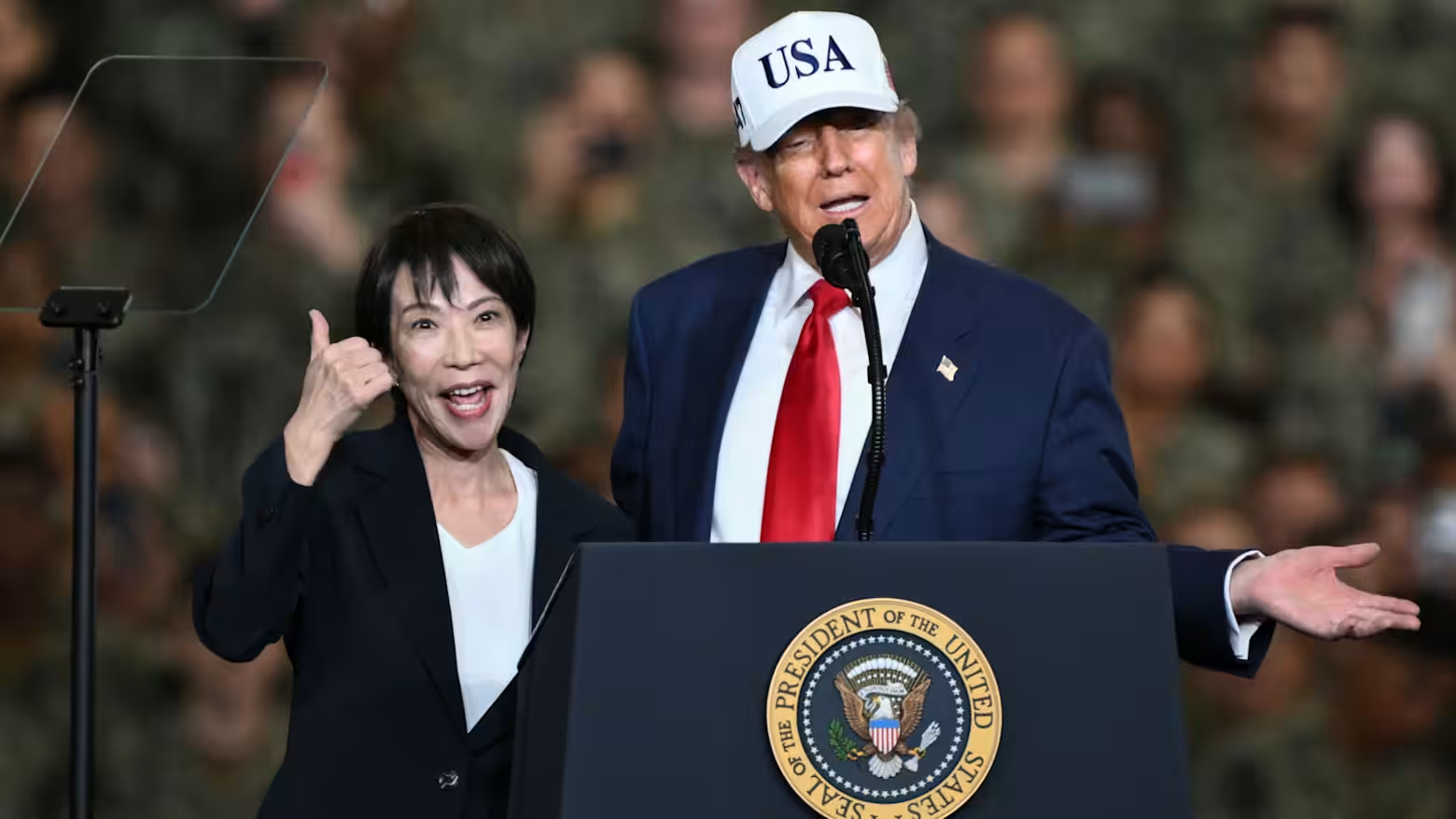
A photograph captured in October depicts Prime Minister Takaichi alongside U.S. President Donald Trump during a speech delivered on the USS George Washington aircraft carrier, an image that visually reinforces the close cooperation between the two nations. Such high-level interactions are crucial in signaling the depth of their partnership, extending beyond mere rhetoric to tangible displays of military and strategic alignment. The symbolism of a joint appearance on a major naval asset like an aircraft carrier speaks volumes about the intertwined defense postures of Japan and the United States.
The challenge for Prime Minister Takaichi and her government in the coming year will be to manage these competing diplomatic priorities effectively. On one hand, the enduring alliance with the United States remains paramount, serving as a critical deterrent and a foundation for regional stability. On the other, the economic realities of East Asia necessitate a pragmatic engagement with China, even as geopolitical tensions persist. Finding a pathway to dialogue and de-escalation with Beijing, without compromising core alliances, represents a significant diplomatic tightrope walk.
This delicate balancing act is not new for Japan, but the current global environment, marked by increased geopolitical competition, amplifies its significance. The Takaichi administration understands that proactive diplomacy is essential to safeguard Japan’s interests and contribute to a stable regional order. The upcoming year will undoubtedly test the ingenuity and resolve of Japanese foreign policy, as it endeavors to strengthen existing bonds while cautiously exploring opportunities for reconciliation with a powerful neighbor. The world will be watching closely as Tokyo navigates this complete and consequential path.
Previous Post
Next Post


Sponsored Content

Sponsored Content