

SpaceX Set to Sell Insider Shares at Record-Shattering $800 Billion Valuation, Redefining the Limits of Private Market Power

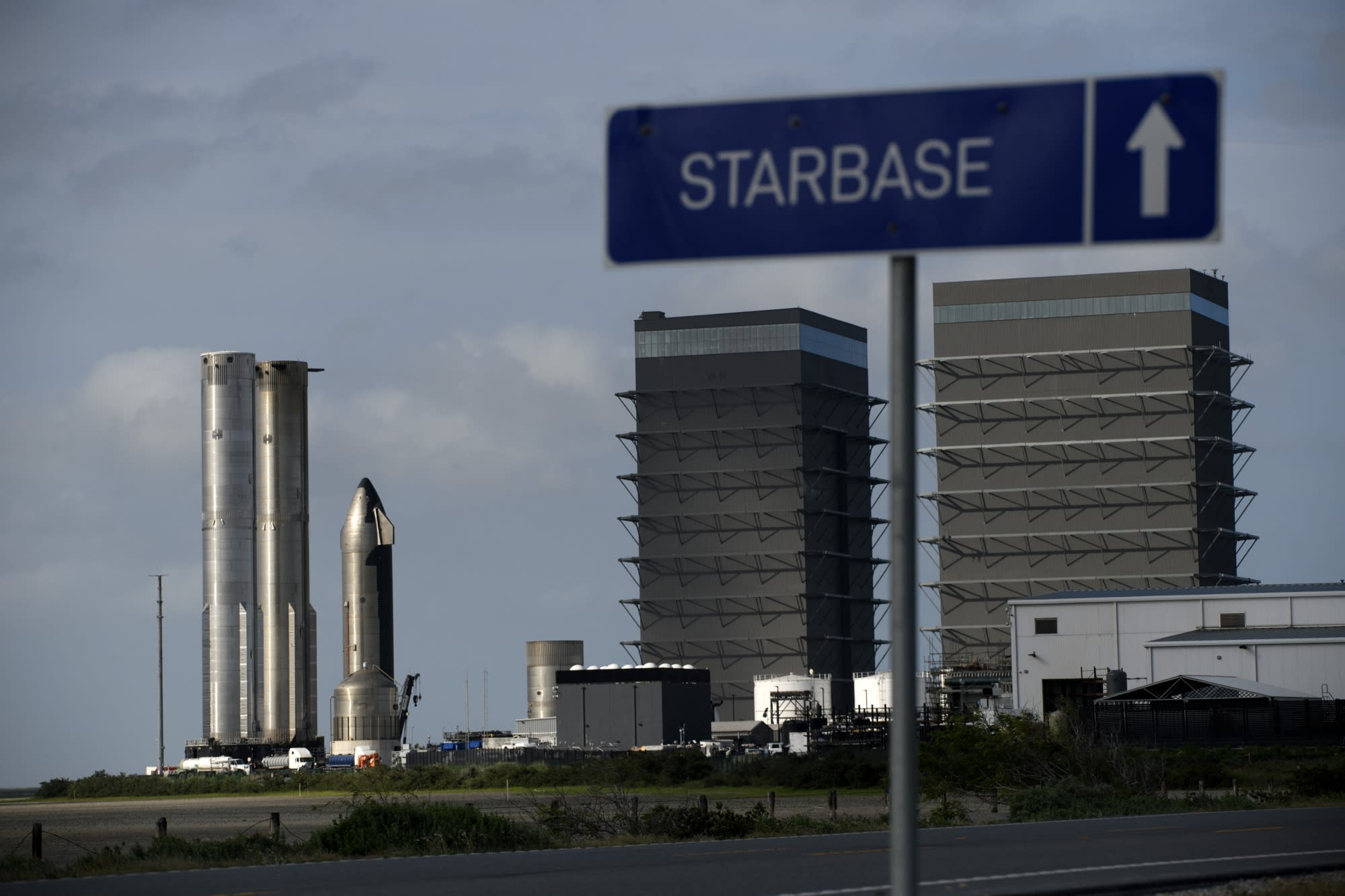
SpaceX is preparing to offer a new round of insider shares at a staggering $800 billion valuation, marking one of the largest private-company valuations in history and underscoring the company’s meteoric rise from an ambitious rocket startup to a fundamental pillar of the global space economy. The move not only cements SpaceX as the most valuable privately held company in the world—it also reshapes expectations around the future of space technology, satellite communications, and private-sector dominance in aerospace.
The share sale, structured as a secondary offering for existing investors and employees, comes at a moment of unprecedented momentum for SpaceX across all business divisions, including Starship, Starlink, and commercial launch services. Investors say demand for shares vastly exceeds supply, with institutional funds, sovereign investors, and high-net-worth individuals competing for stakes in the company’s next phase of expansion.
A Historic Milestone: How SpaceX Reached an $800 Billion Valuation
To understand why the market has placed such a colossal value on SpaceX, analysts point to several converging factors: unmatched technical execution, dominance in commercial launch, exponential Starlink growth, and the company’s ability to succeed in industries where governments once held exclusive control.
1. Starship: The Gateway to Multi-Planetary Expansion
Starship—the fully reusable mega-rocket system—is central to SpaceX’s future. Once fully operational, it will:
- Lower payload costs to unprecedented levels
- Enable deep-space missions, including Mars colonization
- Transform lunar logistics through NASA partnerships
- Allow heavy-lift commercial missions previously impossible
The private markets view Starship as the “next internet”—a foundational technology with trillion-dollar potential.
2. Starlink’s Explosive Revenue Trajectory
Starlink, the company’s satellite-based internet network, has evolved into one of the fastest-growing communications businesses in the world.
Key catalysts include:
- Millions of new global subscribers
- Enterprise and aviation contracts
- Military and government adoption
- Marine and remote-region connectivity
- Potential integration with mobile networks (direct-to-cell)
Some analysts value Starlink alone at $150–$200 billion today, with long-term potential surpassing $1 trillion.
3. Dominance in the Commercial Launch Sector
SpaceX’s Falcon 9 has become the world’s most reliable and cost-effective rocket platform, completing record-breaking launch cadences year after year.
The company now represents:
- Over 60% of global commercial orbital launches
- The majority of U.S. national security launches
- Key infrastructure support for global satellite fleets
Its launch capacity and reusability advantage have left traditional aerospace incumbents struggling to keep pace.
Why Private Investors Are Willing to Pay an Unprecedented Premium
The $800 billion valuation represents more than growth—it represents belief in a technological wave that could redefine the century. Institutional capital is flowing into SpaceX for several reasons:
1. Near-Monopoly Position in Critical Sectors
No competitor matches SpaceX’s combination of:
- Reuse technology
- Launch frequency
- Vertical integration
- Speed of engineering iteration
This has created barriers to entry on a scale rarely seen in modern industries.
2. Massive, Multi-Industry Revenue Streams
SpaceX touches:
- Internet communications
- Defense
- Space logistics
- Satellite manufacturing
- Earth observation
- Interplanetary transport
Few companies have such diversified revenue exposure at such early stages of market growth.
3. Future IPO Potential
Investors see SpaceX or Starlink IPOs as once-in-a-generation liquidity events. Valuations of $1 trillion+ are already projected within five years.
4. Elon Musk’s Track Record
Supporters view SpaceX as Musk’s most technically accomplished endeavor, surpassing even Tesla in engineering complexity. His ability to execute on long-term visions attracts enormous private-capital confidence.
Employee and Insider Share Sales: A Window Into Demand
The new share sale is not a primary fundraising round—SpaceX does not need external cash to operate. Instead, this is a secondary market transaction, giving employees and early investors the ability to realize gains.
Yet the offering reveals several important signals:
- Demand for shares is oversubscribed many times over
- Private market buyers are accepting valuations previously considered impossible
- Employees view SpaceX as a long-term rocket ship—literally and financially
- Institutional hunger for exposure to frontier technologies is intensifying
With limited supply, insiders say the allocation process is highly competitive.
SpaceX’s $800 Billion Valuation in Global Context
To grasp the magnitude of this milestone, consider how it compares to major public companies:
- SpaceX at $800B would be larger than Meta, Berkshire Hathaway, or NVIDIA just five years ago
- It would rank among the top 5 most valuable companies in the world
- It surpasses the market caps of all traditional aerospace giants combined:
- Boeing
- Lockheed Martin
- Northrop Grumman
- Airbus
The company is redefining not just aerospace economics—but global valuation benchmarks.
Risks and Challenges: The Road to a Trillion-Dollar Space Economy
Despite extraordinary momentum, analysts caution that SpaceX faces unique challenges:
1. Capital Intensity
Starship development, Starlink expansion, and launch operations require billions annually.
2. Regulatory Pressures
Space policy, government contracts, and satellite spectrum rights remain politically sensitive.
3. Competition Emerging Slowly but Surely
China, Blue Origin, Arianespace, and others continue to plan next-generation systems.
4. Engineering and Operational Complexity
Starship’s full reusability is unproven at scale—and essential to long-term economics.
5. Market Saturation Risk for Starlink
Maintaining momentum requires continuous technological improvement.
Still, the investor consensus remains overwhelmingly bullish.
Conclusion: SpaceX’s $800 Billion Milestone Marks the Dawn of a New Industrial Era
SpaceX offering insider shares at an $800 billion valuation is more than a financial headline—it is a signal that humanity has entered a new age of industrial growth where space, communication, and planetary expansion are core economic engines.
This valuation reflects:
- Faith in Starship
- The profitability of Starlink
- Dominance in launch
- The vision of interplanetary infrastructure
- The rise of space as the next trillion-dollar market frontier
SpaceX is no longer just a private company—it is becoming one of the defining enterprises of the 21st century.
Related Posts




Sponsored Content

Sponsored Content